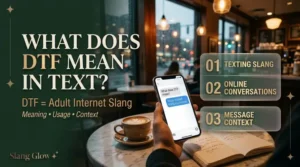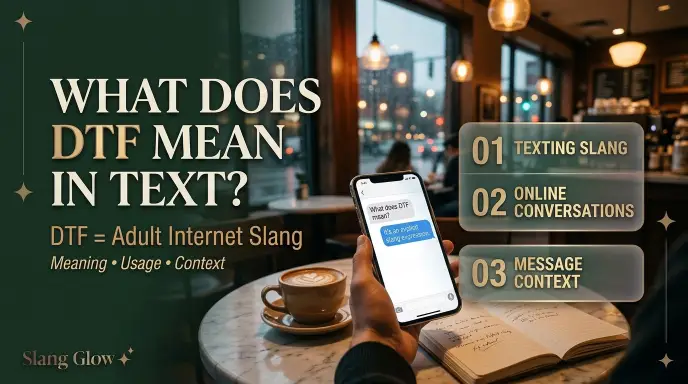
DTF in text usually stands for “Down to F*,” a vulgar slang expression referring to sexual interest.** You may encounter it in online messages, social media discussions, or conversations about dating. It is an explicit abbreviation, so understanding its meaning and tone is important.
People sometimes search for DTF after seeing it in a message, comment, or online conversation. Since the abbreviation contains only three letters, its meaning may not be obvious to someone unfamiliar with internet slang.
Unlike everyday abbreviations such as LOL and BRB, DTF has an adult sexual meaning in common texting and dating contexts. It can also have an unrelated technical meaning, such as Direct to Film in printing.
This guide explains the abbreviation, its common interpretations, and how to recognize its meaning without misunderstanding the conversation.
What Does DTF Mean in Text Messages?
In everyday texting, DTF commonly stands for “Down to F*.”** It is a vulgar expression used to communicate interest or willingness to have sex. Dictionaries classify it as offensive or taboo slang, rather than a polite everyday abbreviation. <Cite refs={[“turn748921search0″,”turn748921search2”]}/>
When someone uses DTF in a personal message, it is important to recognize that the expression is sexual rather than simply meaning that someone wants to hang out.
Here are three important points to remember:
- Adult slang: DTF commonly refers to sexual interest.
- Informal expression: It is generally associated with private messages and casual online language.
- Strong wording: Its full form contains profanity, so it may be considered offensive or inappropriate.
For example:
Emma: “I saw DTF in a comment. What does it mean?”
Sophie: “It’s an explicit abbreviation related to sexual interest.”
Meaning: Sophie is explaining that the abbreviation refers to an adult subject rather than an ordinary invitation to spend time together.
It is also important to remember that receiving this abbreviation does not mean you have to respond positively or continue the conversation.
What Does DTF Stand for in Online Slang?
DTF is an initialism formed from the words in “Down to F*.”** In casual dating related conversations, it generally communicates sexual interest rather than friendship or ordinary social plans.
The abbreviation can be understood in three important ways:
- Sexual meaning: Its common slang interpretation refers to willingness to have sex.
- Vulgar expression: The full phrase contains profanity and can sound disrespectful.
- Context dependent use: In technical conversations, DTF can have an unrelated meaning.
For example, consider this conversation:
Alex: “Someone used DTF in a message. Is it a normal texting abbreviation?”
Jordan: “It is an explicit slang expression, so it isn’t like ordinary shortcuts.”
Meaning: Jordan explains that DTF has a specific adult meaning and should not be confused with everyday abbreviations.
There is also another established use in printing terminology:
DTF = Direct to Film, a printing method used in textile decoration. <Cite refs={[“turn748921search7”]}/>
This is completely different from the common texting meaning. If someone uses DTF in a printing or business discussion, the technical interpretation may be intended.
Where Do People Use DTF?
DTF appears in different forms of online communication, particularly when people discuss slang, dating terminology, or the meaning of unfamiliar abbreviations.
However, the platform does not change the common meaning of DTF in a dating related conversation.
Here are some contexts where you may encounter the abbreviation:
- Private messages: Someone may use DTF while discussing its meaning or referring to adult slang.
- Social media discussions: The abbreviation may appear in posts explaining internet terminology.
- Online conversations: People may use it when discussing the meaning of unfamiliar expressions.
- Technical discussions: Printing professionals may use DTF to mean Direct to Film.
For example:
Mia: “I noticed DTF in an online vocabulary discussion.”
Olivia: “It’s an explicit slang abbreviation, so check its meaning before assuming anything.”
Meaning: Olivia explains that the abbreviation has an adult interpretation in common internet slang.
If you see DTF in an unfamiliar message, consider the subject of the conversation. A discussion about printing may have nothing to do with the slang meaning.
What Does DTF Mean on TikTok, Snapchat, and Instagram?
DTF may appear in discussions about internet slang, dating terminology, and the meaning of unfamiliar expressions. Its common slang meaning remains the same across social media platforms.
Here are some general contexts where the abbreviation may appear:
- TikTok: It may appear in educational discussions explaining adult internet slang.
- Snapchat: Someone may encounter it in a message or while asking about an unfamiliar abbreviation.
- Instagram: It may appear in comments or discussions about online terminology.
- WhatsApp: People may ask what the abbreviation means when they receive an unfamiliar message.
- SMS messages: It can appear as an explicit slang expression rather than an everyday conversational shortcut.
For example:
Noah: “I found DTF in a comment. Is that a normal abbreviation?”
Liam: “No, it has an explicit meaning in common slang.”
Meaning: Liam clarifies that the abbreviation is associated with adult language.
It is also worth remembering that seeing a term on social media does not make it appropriate for every audience.
DTF contains profanity and refers to an adult subject. Understanding its meaning helps you recognize when a conversation is becoming inappropriate or crossing your personal boundaries.
Real Chat Examples of DTF in Text Messages
The following examples explain how someone might encounter the abbreviation in conversations about online language. They are educational examples and do not describe sexual activities.
Example 1: Asking About an Unfamiliar Abbreviation
Emma: “What does DTF mean?”
Sophie: “It’s an explicit adult slang expression.”
Meaning: Sophie identifies the abbreviation as adult slang.
Example 2: Discussing an Online Comment
Mia: “I saw DTF in a comment yesterday.”
Olivia: “It’s not an ordinary texting shortcut.”
Meaning: Olivia explains that the abbreviation has a more explicit meaning than common chat abbreviations.
Example 3: Learning Internet Vocabulary
Noah: “Is DTF the same as BRB?”
Liam: “No, they have completely different meanings.”
Meaning: Liam explains that DTF and BRB are not interchangeable.
Example 4: Setting a Conversation Boundary
Ryan: “Someone used an expression I found uncomfortable.”
Leo: “You don’t have to continue that conversation.”
Meaning: Leo reminds Ryan that personal boundaries should be respected.
Example 5: Understanding a Technical Meaning
Ava: “I found DTF in a printing discussion.”
Ella: “It can mean Direct to Film in printing.”
Meaning: Ella explains the technical interpretation rather than the adult slang meaning.
These examples show why context is important when interpreting DTF. Understanding the abbreviation helps distinguish its adult slang meaning from unrelated uses.
More Real Chat Examples of DTF in Text Messages
DTF may appear in conversations about internet slang, dating terminology, or online culture. The following examples explain how someone might encounter the abbreviation without describing explicit situations.
Example 6: Asking About the Meaning
Emma: “What does DTF stand for?”
Sophie: “It’s an adult slang abbreviation.”
Meaning: Sophie explains that the term has an explicit meaning rather than being an ordinary texting shortcut.
Example 7: Discussing Internet Slang
Noah: “I saw DTF in an online post.”
Liam: “It’s one of those abbreviations with an adult meaning.”
Meaning: Liam recognizes that the abbreviation refers to an adult subject.
Example 8: Asking for Clarification
Mia: “Someone used DTF in a message. Is it appropriate language?”
Olivia: “It contains profanity, so it isn’t suitable for every audience.”
Meaning: Olivia explains why the abbreviation can be inappropriate in some conversations.
Example 9: Discussing Vocabulary
Ryan: “Is DTF like LOL or BRB?”
Leo: “No, it has a completely different meaning.”
Meaning: Leo explains that DTF is not an ordinary conversational shortcut.
Example 10: Setting a Personal Boundary
Ava: “Someone sent me an uncomfortable message.”
Ella: “You don’t have to respond. You can block them if necessary.”
Meaning: Ella encourages Ava to protect her boundaries rather than continue an unwanted conversation.
These examples show that understanding an abbreviation does not mean you have to participate in the conversation where it appears.
How Should You Reply When Someone Uses DTF?
Your response depends on the situation and if the message makes you uncomfortable. Because DTF has an explicit meaning, you should not feel pressured to respond positively or discuss the subject.
Here are four simple ways to respond:
- Neutral reply: “What do you mean by that?”
- Clear reply: “I don’t want to discuss that topic.”
- Firm reply: “Please don’t send me messages like that.”
- Boundary setting reply: “I’m not comfortable with this conversation.”
Example 1: Asking About the Meaning
Emma: “What does DTF mean?”
Sophie: “It’s an adult slang expression.”
Meaning: Sophie provides a general explanation without discussing explicit details.
Example 2: Receiving an Uncomfortable Message
Noah: “Someone sent me an abbreviation I didn’t understand.”
Liam: “You can ask what it means, but you don’t have to continue the conversation.”
Meaning: Liam encourages Noah to make an informed choice.
Example 3: Changing the Subject
Mia: “Someone brought up DTF in our conversation.”
Olivia: “I’d rather talk about something else.”
Meaning: Olivia politely communicates that she does not want to discuss the subject.
Your comfort and boundaries matter. You can end an unwanted conversation, block the sender, or speak to a trusted adult if someone repeatedly pressures or harasses you.
Is DTF Rude or Offensive in Text?
DTF is generally considered offensive or vulgar slang because its full form contains strong profanity and refers to sexual interest. Cambridge Dictionary classifies the abbreviation as offensive. <Cite refs={[“turn571764search1″,”turn571764search3”]}/>
Although some adults use it casually, that does not make it appropriate for every audience.
Here are three important points:
- Profanity: The complete expression contains an explicit swear word.
- Adult meaning: It refers to a sexual subject rather than ordinary friendship or casual conversation.
- Personal boundaries: Nobody should pressure another person to discuss an uncomfortable subject.
Is DTF Appropriate at School or Work?
Generally, no. The abbreviation is not suitable for most school assignments, professional emails, or formal conversations.
More appropriate alternatives depend on the intended message. For example, you can use ordinary expressions such as “Are you interested?” or “Would you like to join?” when discussing a suitable activity.
Knowing what DTF means does not make it appropriate to use. Understanding its tone helps you recognize when language may cross someone’s boundaries.
Who Uses the Expression DTF?
DTF is mainly associated with adult internet slang and dating related conversations. It is not limited to one social media platform or one particular generation.
You may encounter it in these settings:
- Online discussions: People may explain the abbreviation when discussing internet vocabulary.
- Adult dating terminology: It is associated with conversations about sexual interest.
- Entertainment and pop culture: The expression sometimes appears in jokes, television discussions, and references to internet slang.
Is DTF a Gen Z Expression?
DTF is not exclusive to Gen Z. The abbreviation became recognizable in internet and popular culture before many modern social media platforms became widely used.
Younger internet users may encounter the term in online discussions, but familiarity with an abbreviation does not reveal someone’s personal preferences or intentions.
It is more accurate to describe DTF as adult internet slang rather than a phrase belonging to one generation.
Where Did DTF Come From?
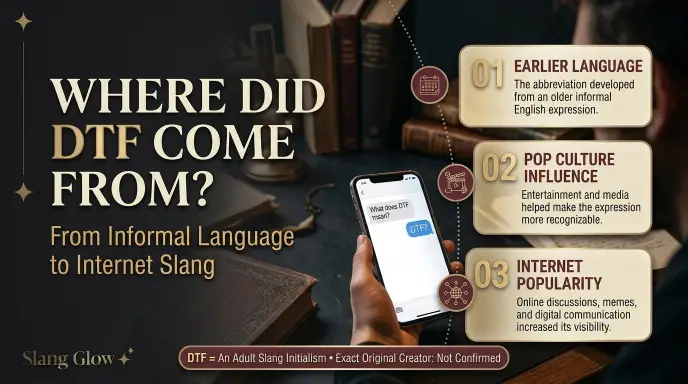
DTF developed from the English expression represented by its three letters. The phrase “down to” has been used informally to communicate willingness or interest, while the final word gives this particular abbreviation its explicit meaning.
The exact person who first created the abbreviation and the precise date of its earliest use are not reliably established.
Three points help explain its background:
- Older informal language: The expression developed from an existing casual phrase in English.
- Internet communication: Shortened language made the three letter version convenient for online conversations.
- Popular culture: Dating related discussions and entertainment helped make the abbreviation more recognizable.
Did DTF Originate on Social Media?
DTF did not originate specifically on TikTok or Instagram. The abbreviation became recognizable through earlier internet communication and popular culture.
It later appeared more widely in online discussions, entertainment references, and digital conversations.
There is no reliable basis for identifying one individual as its confirmed creator. It is better to describe its development as part of informal English and internet slang rather than assign it an unsupported origin story.
DTF vs. Other Common Texting Abbreviations
DTF is different from ordinary texting abbreviations because it has an explicit adult meaning, while most common chat shortcuts communicate everyday reactions or information.
| Term | Meaning | Type | Typical Usage |
| DTF | Down to F*** | Explicit adult slang | Refers to sexual interest |
| IDK | I Don’t Know | Initialism | Expressing uncertainty |
| IDC | I Don’t Care | Initialism | Expressing a lack of concern |
| IMO | In My Opinion | Initialism | Sharing an opinion |
| BRB | Be Right Back | Initialism | Saying someone will return |
These abbreviations have different purposes:
- DTF has an explicit adult meaning and is not an ordinary conversational shortcut.
- IDK and IDC communicate a person’s response or attitude.
- IMO and BRB are commonly used for opinions and everyday messaging.
For example, someone might write “IDK what happened” to express uncertainty, while DTF refers to an entirely different subject.
Do not treat DTF as interchangeable with everyday texting abbreviations. Understanding the difference helps you recognize the tone of a message.
A Real World Example of DTF in a Conversation
Imagine someone receives an unfamiliar abbreviation in a private message and wants to understand it before responding.
Emma: “Someone sent me DTF. I didn’t understand it.”
Sophie: “It’s an explicit adult slang expression.”
Emma: “That’s not a conversation I want to have.”
Sophie: “Then you don’t have to respond.”
In this conversation, Sophie explains the abbreviation and reminds Emma that she can choose not to continue an uncomfortable discussion.
The important lesson is that understanding an explicit abbreviation does not create an obligation to engage with the person who sent it.
Frequently Asked Questions About DTF
Q.1. What does DTF mean in text messages?
DTF stands for “Down to F*.”** It is an explicit slang expression associated with sexual interest.
Q.2. What does DTF mean on TikTok?
DTF generally has the same adult slang meaning on TikTok. It is not an ordinary abbreviation for everyday conversation.
Q.3. Is DTF considered slang?
Yes. DTF is an informal and vulgar internet abbreviation that appears in dating related language and online discussions.
Q.4. Is DTF rude or offensive?
It can be considered offensive because its full form contains profanity and refers to an adult subject.
Q.5. How should you reply when someone uses DTF?
You can ask what they mean or say, “I’m not comfortable discussing that topic.” You do not have to continue an unwanted conversation.
Q.6. Does DTF always have a sexual meaning?
In common texting and dating slang, it usually has a sexual meaning. In technical contexts, DTF can also mean Direct to Film, a printing method.
Final Takeaway
DTF commonly stands for “Down to F*” and is an explicit slang abbreviation associated with sexual interest.** It may appear in online discussions, entertainment references, and adult dating terminology.
Although the abbreviation is recognizable in internet culture, it contains profanity and is not appropriate for every audience or situation.
Understand the meaning, recognize its tone, and respect your personal boundaries. You never have to continue a conversation that makes you uncomfortable.
LEARN MORE!

Hi, I’m James Parker, a writer passionate about modern slang, internet culture, and social media language. I enjoy researching trending words and explaining their meanings in simple, easy to understand English. My goal is to help readers confidently understand and use slang in everyday conversations, texting, and online platforms.