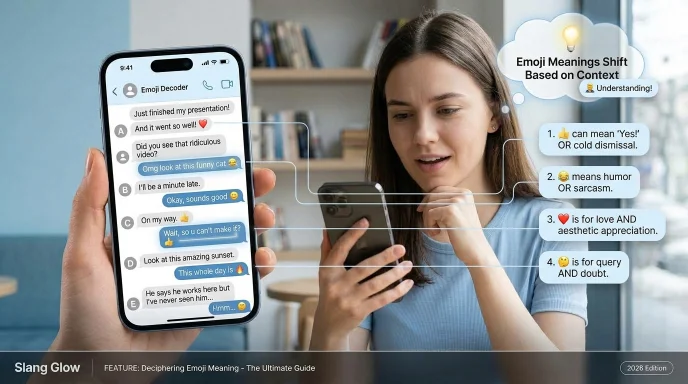
Emojis are small digital symbols people use to express feelings, reactions, ideas, and tone in text messages. Their meaning can change depending on the emoji, the conversation, and the relationship between the people chatting.
What Do Emojis Mean in Text?
Emojis add emotion and context to written messages. Since text does not include facial expressions or voice tone, people often use emojis to show how they feel about something.
For example, a simple message like “Okay” can sound serious or unfriendly. Adding a 🙂 can make the message feel warmer and more friendly.
The same emoji can also have different meanings in different conversations. A ❤️ can show love, but friends may also use it to show strong support or appreciation.
Why Do People Use Emojis in Text Messages?
People use emojis because they can communicate emotions quickly. Instead of writing a long explanation, someone can use 😂 to show that something is funny or 😢 to show sadness.
Emojis can also make short messages easier to understand. They help readers recognize if a message is playful, friendly, excited, surprised, or serious.
Can One Emoji Have Different Meanings?
Yes. An emoji does not always have one fixed meaning.
For example, 👍 can mean “okay,” “sounds good,” or “I agree.” In some conversations, however, the same emoji may feel brief or dismissive.
The surrounding words are important when interpreting an emoji.
Common Emojis and Their Meanings in Text
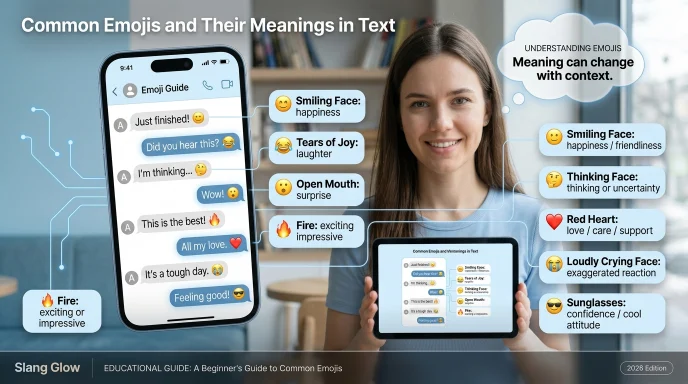
Some emojis appear frequently in everyday texting and social media conversations. Their meanings are usually easy to understand, but context can still change the tone.
😊 Smiling Face
😊 usually shows happiness, friendliness, warmth, or a positive reaction.
Example:
“Thanks for helping me 😊”
Here, the emoji makes the message sound appreciative and friendly.
😂 Face With Tears of Joy
😂 usually means that something is very funny.
Example:
“You really said that 😂”
It can also show that someone is laughing at a funny situation or joke.
❤️ Red Heart
❤️ commonly represents love, care, affection, support, or appreciation.
Example:
“Thank you so much ❤️”
In this context, the heart can show warmth and gratitude without necessarily having a romantic meaning.
😭 Loudly Crying Face
😭 can represent sadness, but people also use it online to show that something is extremely funny, overwhelming, or emotionally intense.
Example:
“That video was too funny 😭”
The surrounding message makes it clear that the person is reacting strongly rather than necessarily being sad.
1.😂 vs. 😭 in Texting
2.😂 and 😭 can both appear in funny conversations, but they create different tones.
3.😂 directly communicates laughter.
😭 can communicate an exaggerated emotional reaction, including laughing very hard or feeling overwhelmed.
What Do Popular Emojis Mean on Social Media?
Emojis are common on platforms such as TikTok, Instagram, Snapchat, and messaging apps. Their meaning can sometimes depend on online culture and the way people use them in comments or captions.
Emojis on TikTok
TikTok users often combine emojis with slang, captions, comments, and short replies.
For example, someone might use 😭 after a funny comment to show an exaggerated reaction.
Emojis on Instagram
On Instagram, emojis can appear in captions, comments, direct messages, and reactions.
❤️ may show appreciation for a post, while 🔥 can describe something exciting, impressive, or visually appealing.
Emojis on Snapchat
Snapchat users commonly use emojis in messages, captions, and reactions.
The meaning usually comes from the surrounding conversation. A simple emoji reply can communicate a quick reaction without requiring a full sentence.
Emojis in Regular Text Messages
In SMS and other private chats, emojis often help show the intended tone.
For example:
“Sure.”
can sound neutral, while:
“Sure 😊”
can feel more friendly.
How Do You Understand an Emoji in a Text?
The best way to understand an emoji is to look at the complete message instead of interpreting the symbol alone.
Consider these three things:
- The words around the emoji
- The situation or topic
- The relationship between the people
For example, 👍 after “I finished the assignment” could simply mean “Okay” or “Good job.” Its exact tone depends on the conversation.
Look at the Message Before the Emoji
The words before an emoji often explain what the person means.
“That’s hilarious 😂” clearly uses the emoji as a laughter reaction.
“I’m really tired 😭” uses the same emoji to express a strong emotional reaction.
Consider the Person Sending It
Friends may use emojis casually and playfully. Someone you do not know well may use the same emoji in a more straightforward way.
Understanding the sender’s usual texting style can make the meaning easier to identify.
Consider the Overall Tone
An emoji can soften a message, add humor, show excitement, or make a reaction stronger.
That is why reading the complete conversation is more useful than assigning one permanent meaning to every emoji.
Why Do Emojis Matter in Texting?
Emojis matter because written messages do not naturally show facial expressions, gestures, or voice tone. A short sentence can therefore be interpreted in several ways.
Adding an emoji can give the reader more information about the intended emotion.
For example:
“Nice”
may sound neutral.
“Nice! 😊”
sounds more clearly positive and friendly.
“Nice 😂”
could suggest that the person is joking or reacting humorously.
The emoji does not completely change the words, but it can influence how the message feels.
Can Emojis Change the Meaning of a Text?
Yes. An emoji can change the emotional tone of a message without changing the actual words.
Consider:
“Really?”
This could express confusion, surprise, doubt, or curiosity.
“Really? 😭”
could suggest an exaggerated emotional reaction.
“Really? 😂”
could suggest that the person finds the situation funny.
“Really? 😮”
could show surprise.
The words stay almost the same, but the emoji gives the reader an important clue about the intended tone.
Do Different People Interpret Emojis Differently?
Yes. Emoji interpretation can vary between people, age groups, communities, and online platforms.
A person may use an emoji in a way that feels obvious to their friends but confusing to someone else.
This is especially common with emojis that have several popular uses. Context helps reduce confusion.
Why Context Is Important
There is no universal rule that every emoji must have exactly one meaning in every conversation.
For this reason, it is better to ask what the sender means if an emoji seems unclear.
For example:
“What did you mean by that emoji?”
is a simple way to avoid misunderstanding.
What Is the Difference Between an Emoji and a Text Abbreviation?
An emoji is a visual symbol, while a text abbreviation uses letters or shortened words.
For example:
| Type | Example | Purpose |
| Emoji | 😂 | Shows laughter or a strong reaction |
| Emoji | ❤️ | Shows care, love, or support |
| Abbreviation | LOL | Means laughing out loud |
| Abbreviation | IDK | Means I don’t know |
| Abbreviation | BRB | Means be right back |
Both can make texting faster and more expressive. However, they communicate information in different ways.
Are Emojis Slang?
Emojis are not automatically slang. They are symbols used to communicate ideas, emotions, and reactions.
However, some emoji uses can become connected with slang or internet culture. People may give an emoji a particular meaning within a community or use it in a playful way that differs from its basic visual meaning.
This is another reason context matters when reading messages online.
Most Common Emojis and What They Mean
Many emojis appear regularly in texting and online conversations. Their basic meanings are easy to recognize, but the exact tone can change depending on the message.
👍 Thumbs Up Emoji
👍 usually means agreement, approval, acknowledgment, or “okay.”
Example:
“Can you send it tonight?”
“👍”
Here, the emoji can mean “Okay” or “Sure.”
👎 Thumbs Down Emoji
👎 usually shows disagreement, dislike, or a negative reaction.
Example:
“Did you like the movie?”
“👎”
The person is showing that they did not like it.
😍 Smiling Face With Heart Eyes
😍 commonly shows strong excitement, admiration, or affection.
Example:
“That new outfit looks amazing 😍”
It can show that the person really likes something.
😎 Smiling Face With Sunglasses
😎 often represents confidence, being relaxed, or a cool and playful attitude.
Example:
“Finished everything before the deadline 😎”
The emoji adds a confident tone.
🤔 Thinking Face
🤔 usually shows that someone is thinking, unsure, questioning something, or considering an idea.
Example:
“Maybe we should leave earlier 🤔”
It suggests that the person is thinking about the idea.
😮 Face With Open Mouth
😮 commonly represents surprise, shock, or amazement.
Example:
“You actually won? 😮”
The emoji emphasizes the person’s surprise.
😢 Crying Face
😢 generally represents sadness, disappointment, or feeling upset.
Example:
“I missed the concert 😢”
Here, the emoji clearly adds a sad tone.
😡 Angry Face
😡 usually shows anger, frustration, or strong annoyance.
Example:
“They canceled it again 😡”
The emoji makes the frustration more obvious.
🙄 Face With Rolling Eyes
🙄 can show annoyance, disbelief, sarcasm, or frustration.
Example:
“He forgot his keys again 🙄”
It suggests that the person is annoyed by the situation.
🔥 Fire Emoji
🔥 is often used to describe something exciting, impressive, popular, or excellent.
Example:
“That song is 🔥”
It means the person thinks the song is really good or exciting.
What Do Heart Emojis Mean in Text?
Heart emojis can have different meanings depending on their color and the situation.
❤️ Red Heart
❤️ commonly expresses love, care, affection, appreciation, or support.
🩷 Pink Heart
🩷 can express affection, warmth, sweetness, or caring feelings.
💙 Blue Heart
💙 can represent support, trust, friendship, or affection.
💚 Green Heart
💚 may represent support, care, nature, or a positive feeling.
💛 Yellow Heart
💛 is often associated with friendship, happiness, warmth, and positive feelings.
🖤 Black Heart
🖤 can express a dark or playful sense of humor, emotional support, or affection. Its meaning depends heavily on the conversation.
The color alone does not always tell you exactly what the sender means.
What Do Laughing Emojis Mean in Text?
Laughing emojis are commonly used when someone finds something funny or wants to show a strong reaction.
😂 Face With Tears of Joy
😂 usually communicates laughter or that something is very funny.
🤣 Rolling on the Floor Laughing
🤣 represents an even stronger laughing reaction.
😭 Loudly Crying Face
😭 traditionally represents intense sadness, but online it is also commonly used as an exaggerated reaction to something funny or overwhelming.
For example:
“You really posted that 😭”
The person may be laughing or reacting dramatically rather than actually crying.
What Do Hand Gesture Emojis Mean?
Hand emojis can communicate quick reactions without requiring a full sentence.
👋 Waving Hand
👋 usually means hello, goodbye, or a friendly greeting.
🙏 Folded Hands
🙏 can express thanks, a request, hope, appreciation, or prayer depending on context.
👏 Clapping Hands
👏 commonly shows applause, congratulations, approval, or emphasis.
✌️ Victory Hand
✌️ can represent peace, victory, or a casual positive gesture.
🤝 Handshake
🤝 can represent agreement, cooperation, partnership, or support.
How Do Emojis Affect the Tone of a Text?
Emojis can make a message feel warmer, more playful, more emotional, or more casual.
Compare these messages:
“Good job.”
“Good job! 👏”
“Good job 😂”
“Good job ❤️”
The words are almost identical, but each emoji creates a different tone.
The first message is simple.
👏 adds praise or congratulations.
😂 can make the message playful or humorous.
❤️ adds warmth or appreciation.
Can Emojis Be Used Sarcastically?
Yes. People sometimes use emojis to make a sarcastic or ironic reaction.
For example:
“Great, another meeting 🙄”
The words “Great” sound positive by themselves, but 🙄 can show that the person is actually annoyed.
Another example is:
“Wow, amazing job 😂”
Depending on the conversation, 😂 could suggest that the statement is not completely serious.
Sarcasm is especially difficult to understand through text, so the surrounding conversation matters.
What Does It Mean When Someone Sends Just an Emoji?
A single emoji can work as a complete response.
For example:
“Are you coming?”
“👍”
This likely means “Yes,” “Okay,” or “Sounds good.”
A message such as:
“I got the news.”
“😮”
can show surprise.
Similarly:
“I finally finished it!”
“👏”
can show congratulations or approval.
The meaning comes from the message that came before the emoji.
How Should You Reply to an Emoji?
Your reply depends on what the emoji communicates.
- If someone sends ❤️, you can respond with a friendly message or another appropriate emoji.
- If someone sends 😂, you might continue the joke or respond with another humorous reaction.
- If someone sends 👍, a short reply such as “Thanks” or “Perfect” may be enough.
You do not always need to respond with another emoji. A normal text response can be clearer when the conversation is important.
Can Emojis Cause Misunderstandings?
Yes. Emojis can sometimes create confusion because different people interpret them differently.
An emoji that feels friendly to one person might feel sarcastic or cold to another. The meaning can also change depending on the platform, conversation, and relationship between the people.
For example, 👍 may simply mean “okay” to one person. Another person might interpret it as a very short or dismissive response.
When the meaning matters, looking at the complete conversation is more reliable than focusing on one symbol.
What Do Emojis Mean in Different Texting Situations?
The same emoji can communicate different feelings in different situations.
In Friendly Conversations
Friends often use emojis to add humor, excitement, or warmth.
Example:
“See you later 😊”
In Group Chats
Emojis can provide quick reactions when several people are talking.
Example:
“Who wants pizza? 🍕”
A person might respond with 🙋 to show interest.
In Social Media Comments
People often use emojis to react to posts without writing a complete sentence.
For example, 🔥 can show that someone thinks a post, song, outfit, or idea is impressive.
In Serious Conversations
Emojis should be understood carefully during serious conversations because the wrong symbol can make a message seem less serious than intended.
Reading the full message and considering the situation is important.
What Is the Best Way to Understand Emoji Meanings?
There is no single rule that explains every emoji in every conversation.
The best approach is to consider the emoji, the words around it, the situation, and the relationship between the people.
An emoji dictionary can explain a common meaning, but real conversations may use the same symbol differently.
When an emoji seems confusing, context usually provides the most useful clue.
Frequently Asked Questions About Emojis in Text
What Do Emojis Mean in Text Messages?
Emojis are visual symbols that help express emotions, reactions, tone, and ideas in text messages. Their exact meaning depends on the emoji and the surrounding conversation.
Can One Emoji Have Multiple Meanings?
Yes. Many emojis can have more than one meaning. For example, 😭 can represent sadness, but people also use it online for an exaggerated reaction to something funny or overwhelming.
What Does ❤️ Mean in Text?
❤️ commonly represents love, care, affection, appreciation, or support. The exact meaning depends on the relationship and conversation.
What Does 😂 Mean in Text?
😂 usually means that something is very funny or that the sender is laughing.
Why Do People Use Emojis in Texting?
People use emojis to express feelings and tone quickly. They can also make short messages feel clearer, friendlier, or more playful.
Can Emojis Be Misunderstood?
Yes. Different people may interpret the same emoji differently. Context, wording, and the relationship between the sender and receiver can help clarify the intended meaning.
Final Thoughts on Emojis and What They Mean in Text
Emojis make digital conversations more expressive by adding emotion, tone, and quick reactions to written messages. Common symbols such as ❤️, 😂, 😊, 👍, 😭, and 🔥 can communicate different ideas depending on how they are used.
The most important thing to remember is that an emoji does not always have one fixed meaning. Looking at the complete message and the surrounding conversation can help you understand what the sender intended.
DECODE MORE ARTICLES!

Hey, I’m Emily. I’ve spent way too many hours scrolling TikTok and group chats trying to figure out what people actually mean by half the slang flying around — and somewhere along the way that turned into a whole thing I write about now. I cover internet slang, TikTok trends, and how words shift meaning practically overnight online.