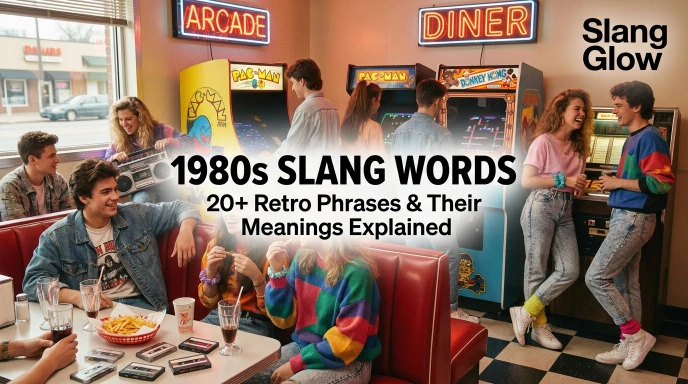
1980s slang words are casual expressions popular in the 1980s, such as rad, gnarly, dude, totally, awesome, bogus, and tubular. The 1980s slang words were full of colorful slang, funny expressions, and catchy phrases.
Young people used these words at school, with friends, at parties, and while talking about music and movies.
Many 1980s slang words came from television, music, skateboarding, surfing, and teenage culture.
Some disappeared over time, while others are still used today.
Why Was 1980s slang words So Popular?
The 1980s brought major changes in music, movies, television, and youth culture.
These trends helped new words spread quickly.
Popular slang could come from:
- Movies
- TV shows
- Music
- Skateboarding
- Surfing
- Video games
- Schools
- Teenage culture
Without social media, people mainly learned new expressions from friends and popular culture.
What Made 1980s slang words Different?
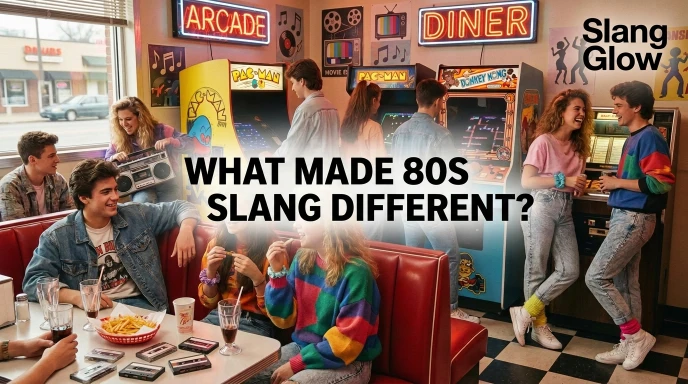
Many 80s expressions sounded fun, dramatic, and energetic.
People often used short words to show excitement, approval, surprise, or disappointment.
Some expressions were also connected to specific groups or regions.
For example, surfing culture helped popularize words such as gnarly and tubular.
1. Rad
Rad was a short form of “radical.”
It meant excellent, exciting, or impressive.
Example:
“That skateboard is rad.”
Today, awesome or amazing can express a similar idea.
2. Totally
Totally was often used to show strong agreement.
It could make a simple “yes” sound more enthusiastic.
Example:
“Are you coming with us?”
“Totally!”
The word became strongly linked with casual teenage speech.
3. Awesome
Awesome meant very good, exciting, or impressive.
The word existed before the 1980s, but it became very common in casual speech.
Example:
“That movie was awesome.”
It is one of the old expressions that remains popular today.
4. Gnarly
Gnarly could mean extreme, difficult, rough, or impressive.
Its meaning depended on the situation.
Example:
“That was a gnarly wave!”
The word became closely connected with surfing and skateboarding culture.
5. Bodacious
Bodacious meant excellent, impressive, or remarkable.
It had a playful and exaggerated sound.
Example:
“That is a bodacious car!”
Today, it often gives language a retro 80s feeling.
6. Gag Me
“Gag me” was an exaggerated reaction to something disgusting or unpleasant.
It was usually meant humorously.
Example:
“Gag me! That smells terrible.”
The phrase became associated with the Valley Girl stereotype.
7. Grody
Grody meant dirty, disgusting, or unpleasant.
It was often used as a dramatic reaction.
Example:
“That old bathroom is grody.”
The word now sounds very retro to many English speakers.
8. No Duh
“No duh” was a sarcastic way to say something was obvious.
Example:
“It is raining outside.”
“No duh!”
Depending on the tone, it could sound funny, teasing, or rude.
9. Fer Sure
“Fer sure” was a casual version of “for sure.”
It showed agreement or certainty.
Example:
“Are you going?”
“Fer sure!”
The spelling often appears when people try to capture casual 80s pronunciation.
10. Like
Like became a common conversational filler.
People could use it while telling stories or describing reactions.
Example:
“I was like, ‘Seriously?’”
This style of speaking continued beyond the 1980s.
11. Preppy
Preppy described a particular fashion and lifestyle style.
It was associated with private school and upper middle class culture.
Example:
“He has a preppy style.”
The word could describe clothes, behavior, or appearance.
12. Wicked
In some regions, wicked could mean very good or impressive.
Example:
“That concert was wicked!”
The word shows why regional context matters when understanding slang.
13. Bitchin’
Bitchin’ was an informal way to say excellent or impressive.
Example:
“That is a bitchin’ car.”
It has a coarse tone, so it is not suitable for every situation.
Today, it can sound deliberately retro.
14. Take a Chill Pill
“Take a chill pill” meant calm down or relax.
Example:
“Take a chill pill. Everything is fine.”
The phrase became one of the most recognizable 80s expressions.
15. What’s Your Damage?
“What’s your damage?” was a sarcastic way to ask why someone was behaving badly.
Example:
“What’s your damage? I was only joking.”
The expression became especially recognizable through 80s teen movies.
16. I’m So Sure
“I’m so sure” could be used sarcastically.
It often meant the speaker did not believe something.
Example:
“You think he will come?”
“I’m so sure.”
The meaning depended heavily on tone and context.
17. Party Hearty
“Party hearty” was a playful way to say have fun and enjoy yourself.
Example:
“It’s the weekend, so party hearty!”
The expression has a very cheerful and retro sound.
18. Totally Tubular
“Totally tubular” meant extremely good or impressive.
It was closely connected with surfing culture.
Example:
“That was a totally tubular trick!”
Today, people often use it jokingly to sound very 80s.
19. Radical
Radical could mean excellent, exciting, unusual, or extreme.
Example:
“That is a radical idea!”
The shorter form “rad” became especially popular.
20. Cool Beans
“Cool beans” was a playful way to say great, good, or acceptable.
Example:
“You got the tickets?”
“Cool beans!”
It usually had a friendly and lighthearted tone.
21. Bogus
Bogus could mean fake, unfair, or disappointing.
Example:
“That deal is bogus.”
It could describe something that was literally fake or simply not fair.
22. Bummer
Bummer meant something was disappointing or unfortunate.
Example:
“You missed the bus? What a bummer.”
The word is still understood but can sound old school today.
23. Hella
Hella was used to mean very or a lot.
Example:
“That game was hella fun.”
The expression has strong Northern California roots.
It later became known outside its original regional setting.
24. Dweeb
Dweeb was a teasing term for someone considered awkward or uncool.
Example:
“Don’t call him a dweeb.”
It could be playful between friends or insulting in another context.
25. Geek
Geek was often used for someone very interested in technology, school, or specialized hobbies.
Example:
“He was a computer geek.”
Today, geek can be positive, especially when describing someone who knows a lot about a favorite subject.
26. Nerd
Nerd traditionally described someone seen as very academic or socially awkward.
Example:
“She was called a math nerd.”
The word has changed over time and is now often used positively.
27. Airhead
Airhead described someone who seemed silly, forgetful, or absent minded.
Example:
“I forgot my keys again. I’m such an airhead.”
It was an informal term and could be insulting.
28. inept person
inept person was historically used as an insult for someone considered clumsy or overly energetic.
The term can be offensive, so it is better avoided in modern respectful speech.
It may still appear when discussing historical language or old movies.
29. Dork
Dork was a playful insult for someone considered awkward or silly.
Example:
“You are such a dork!”
Among friends, it can be teasing rather than seriously insulting.
30. Valley Girl
Valley Girl described a stereotype connected with teenage culture in California’s San Fernando Valley.
The expression became widely known through 1980s popular culture.
Words such as “like,” “totally,” and “gag me” were often associated with this speech style.
However, the stereotype was largely shaped by movies and media, so it should not be treated as a description of everyone from the area.
What Do These Expressions Tell Us About the 1980s?
These expressions show how closely language and culture are connected.
Surfing, skateboarding, music, movies, television, and school life all influenced the way young people talked.
Some terms disappeared as trends changed.
Others survived because they remained useful in casual English.
31. Radical Dude
“Radical dude” was a playful way to describe an impressive or exciting person.
It combined the popular word “radical” with “dude,” another casual term strongly linked with relaxed youth speech.
Example:
“You fixed that bike yourself? Radical dude!”
32. Dude
Dude was a casual word for a person, guy, or friend.
It could also be used as a reaction to surprise.
Example:
“Dude, you have to see this!”
Although the word existed long before the 1980s, it became strongly connected with American youth and surf culture.
33. Homeboy
Homeboy referred to a close male friend, especially someone from the same neighborhood or social group.
Example:
“That’s my homeboy from school.”
The term has roots in African American and Chicano communities and later became more widely used in popular culture.
34. Fly
Fly could mean stylish, fashionable, or attractive.
Example:
“Those shoes are really fly.”
The expression was especially connected with Black American culture and hip-hop.
It later became familiar to a much wider audience.
35. Fresh
Fresh could describe something that looked stylish, new, or impressive.
Example:
“Those sneakers look fresh.”
The word became popular in youth culture and was particularly visible in music and fashion.
36. Def
Def was a shortened form used to mean excellent, impressive, or very good.
Example:
“That new track is def!”
It was strongly associated with hip hop and urban youth culture.
The spelling gave the word a distinctly informal feel.
37. Dope
Dope could mean excellent or impressive in certain slang contexts.
Example:
“That jacket is dope.”
The word has a complicated history because “dope” can also have other meanings.
Its positive slang meaning became increasingly visible through music and youth culture.
38. Phat
Phat was a stylized slang spelling used to mean excellent, attractive, or impressive.
Example:
“That is a phat jacket!”
The expression became especially associated with hip hop culture.
It is now mostly recognized as a historical or retro slang term.
39. Choice
Choice could describe something that was excellent or especially good.
Example:
“That is a choice skateboard.”
It was a short and positive way to show approval.
40. Mint
In some informal contexts, mint could mean excellent, perfect, or in great condition.
Example:
“That old car is mint.”
The expression was especially common in certain varieties of British and regional English.
Its meaning could vary depending on location.
41. Ace
Ace was a casual way to say something was excellent or first rate.
Example:
“That was an ace performance!”
The term has a long history and was not limited to the 1980s.
Still, it fits the informal vocabulary of the period, especially in British English.
42. Crib
Crib was used as slang for someone’s home or house.
Example:
“Come over to my crib after school.”
The expression later became especially common in hip hop and youth culture.
43. Jam
A jam could refer to a song, musical session, or enjoyable activity.
Example:
“This song is my jam.”
The phrase “my jam” became a popular way to describe something a person really enjoyed.
Its modern use continues to be common.
44. Jammin’
Jammin’ described people playing music, enjoying themselves, or having a good time.
Example:
“The band was jammin’ all night.”
The expression had strong connections with music culture.
45. Bounce
Bounce could mean leave or go somewhere.
Example:
“It’s getting late. I’m going to bounce.”
The phrase was casual and often used between friends.
It remains recognizable in modern informal English.
46. Dip
Dip was another informal way to say leave.
Example:
“I have to dip before dinner.”
The word was short, simple, and easy to use in casual conversation.
47. Split
Split could mean leave a place.
Example:
“Let’s split before it gets too late.”
It was a quick way to tell friends that you were ready to go.
48. Bail
Bail could mean leave suddenly or cancel plans.
Example:
“I have to bail on the movie tonight.”
The expression is still common in informal English.
49. Hang Out
Hang out meant to spend relaxed time with friends.
Example:
“We are going to hang out at the mall.”
The phrase became a familiar part of everyday youth language.
It remains widely used today.
50. Hang Loose
“Hang loose” meant relax, stay calm, or take it easy.
Example:
“Just hang loose. We have plenty of time.”
The phrase was strongly connected with surfing culture.
51. Take It Easy
“Take it easy” was a friendly way to say relax or stay calm.
It could also be used when saying goodbye.
Example:
“See you tomorrow. Take it easy!”
Unlike many period-specific expressions, this phrase remains common today.
52. Peace
Peace could be used as a casual goodbye or farewell.
Example:
“Catch you later. Peace!”
The expression became particularly visible through music and youth culture.
53. Later
Later was a short and casual way to say goodbye.
Example:
“I’m heading home. Later!”
Its simplicity made it easy to use among friends.
54. Catch You Later
“Catch you later” meant see you later.
Example:
“I have to go now. Catch you later!”
It was friendly and informal rather than formal.
55. What’s Up?
“What’s up?” was a casual way to ask how someone was doing or what was happening.
Example:
“Hey, what’s up?”
The phrase became a familiar part of informal American conversation.
It remains common today.
56. You Rock
“You rock” was a strong way to tell someone they were great or impressive.
Example:
“You helped me with my project. You rock!”
The phrase has remained popular because it is simple and positive.
57. Rock On
“Rock on” was used to show enthusiasm, approval, or excitement, especially around music.
Example:
“That band is amazing. Rock on!”
The phrase became strongly connected with rock music culture.
58. Eat My Shorts
“Eat my shorts” was a humorous and defiant phrase meaning something like “go away” or “I don’t care what you think.”
It became widely recognizable through 1980s television and pop culture.
Example:
“You want me to apologize?”
“Eat my shorts!”
59. Don’t Have a Cow
“Don’t have a cow” meant don’t overreact or get too upset.
Example:
“Don’t have a cow. I’ll fix it.”
The phrase became especially famous through The Simpsons, which premiered in 1989.
60. Cowabunga
Cowabunga was an energetic expression of excitement or enthusiasm.
Example:
“Cowabunga! Let’s go!”
It became strongly associated with surf culture and 1980s cartoons, especially later through Teenage Mutant Ninja Turtles.
61. Excellent
Excellent could be used as an enthusiastic reaction meaning very good or perfect.
Example:
“You finished the project? Excellent!”
The word itself is not slang, but its dramatic use became a recognizable feature of certain 80s characters and comedy styles.
62. Party Animal
A party animal was someone who loved parties and social events.
Example:
“He is a real party animal.”
The phrase was commonly used to describe someone who enjoyed a very active social life.
63. Yuppie
Yuppie was a shortened form associated with young urban professionals.
It described a particular social group connected with professional careers, business, and urban life.
Example:
“The movie makes fun of the yuppie lifestyle.”
The term became especially prominent during the 1980s economic and cultural boom.
64. Wall Street
In 1980s conversations, Wall Street could be used as shorthand for the world of finance, investment, and ambitious business culture.
It was especially relevant during discussions about the decade’s business boom and wealth culture.
Example:
“He wants to work on Wall Street.”
65. Material Girl
“Material girl” became a recognizable phrase for someone strongly interested in money, luxury, or expensive things.
The expression became closely linked with 1980s pop culture and fashion.
Example:
“She loves designer clothes and has a material girl image.”
66. Big Hair
Big hair referred to the large, heavily styled hairstyles that became iconic during the decade.
Example:
“Her big hair was classic 80s style.”
The phrase is now commonly used when describing retro fashion.
67. Radness
Radness was a playful noun built from “rad.”
It referred to the quality of being exciting, impressive, or extremely cool.
Example:
“The radness of that skateboard trick was unreal.”
It was much less formal than standard English and worked mainly in casual speech.
68. Killer
Killer could be used positively to describe something excellent, impressive, or exciting.
Example:
“That is a killer song!”
The literal meaning of the word is different, so context was important.
69. Mega
Mega could be used as an intensifier meaning very large, powerful, or impressive.
Example:
“That was a mega concert!”
The word appeared in different forms of informal speech and could emphasize excitement.
70. Awesome Sauce
“Awesome sauce” was a playful extension of awesome.
It meant that something was really good or enjoyable.
Example:
“You brought pizza? Awesome sauce!”
The expression has a deliberately silly tone and is often used for humor.
71. Totally Awesome
“Totally awesome” was an enthusiastic way to describe something as extremely good or exciting.
Example:
“That new arcade is totally awesome!”
The combination became recognizable because both words were strongly associated with casual youth speech.
72. Far Out
Far out could express surprise, excitement, or admiration.
Example:
“Far out! You actually won!”
The phrase was older than the 1980s but continued to appear in informal speech.
73. Outta Sight
“Outta sight” was an informal way to say excellent, impressive, or amazing.
Example:
“That performance was outta sight!”
It had roots in earlier American slang but remained recognizable through later popular culture.
74. Groovy
Groovy meant cool, enjoyable, or fashionable.
Although strongly associated with the 1960s and 1970s, the expression could still appear in the 1980s.
Example:
“That is a groovy song.”
Its continued use often carried a retro or humorous tone.
75. Square
Square was an older slang term for someone considered conventional, old fashioned, or not part of a trend.
Example:
“Don’t be such a square.”
By the 1980s, the word often sounded deliberately old fashioned.
76. Nerdy
Nerdy described something associated with academic interests, technology, or socially awkward behavior.
Example:
“He has a nerdy sense of humor.”
Unlike the more insulting “nerd,” the adjective could simply describe someone’s interests or style.
77. Bummer Dude
“Bummer dude” combined a word for disappointment with a casual way of addressing someone.
It could be used humorously when reacting to bad news or an unfortunate situation.
Example:
“You missed the concert? Bummer, dude.”
The combination creates a distinctly casual, retro tone.
78. Killer Duds
Duds was an informal word for clothes or outfits.
A phrase such as “killer duds” could describe very impressive clothing.
Example:
“Those are some killer duds!”
The expression reflects the strong connection between fashion and youth slang during the decade.
79. Book It
“Book it” meant leave quickly or move fast.
Example:
“The movie starts in five minutes. Book it!”
The phrase could also suggest moving with urgency.
80. Get Real
“Get real” was a direct way to tell someone to be realistic or stop pretending.
Example:
“You think we can finish that in five minutes? Get real!”
Depending on tone, it could sound humorous, annoyed, or dismissive.
81. Give Me a Break
“Give me a break” was used to express disbelief, annoyance, or frustration.
Example:
“You expect me to believe that? Give me a break!”
It remains common in everyday English.
82. Big Time
Big time was used to emphasize that something happened to a great degree.
Example:
“He messed up big time.”
It could also mean something was very successful or important.
83. For Real
“For real” was used to ask if something was true or serious.
Example:
“You won the competition? For real?”
It could also show agreement.
Example:
“That movie was amazing.”
“For real!”
84. Seriously
Seriously could be used as a quick reaction showing surprise, disbelief, or annoyance.
Example:
“Seriously? You forgot again?”
Its conversational use remains common today.
85. My Bad
“My bad” was a casual way to admit a mistake or apologize.
Example:
“I took your notebook by accident. My bad.”
The phrase became popular in informal American speech and remains widely understood.
86. No Problem
“No problem” was a relaxed way to say it is okay or you are welcome.
Example:
“Thanks for helping me.”
“No problem!”
It became a common alternative to more formal responses.
87. Chill
Chill could mean relax, stay calm, or take things easy.
Example:
“Just chill. We have plenty of time.”
The word has remained highly useful in informal English.
88. Chill Out
“Chill out” meant relax or calm down.
Example:
“Chill out! There is nothing to worry about.”
The expression remains common in modern casual conversation.
89. Loser
Loser was often used as an insult for someone considered unsuccessful, uncool, or unpopular.
Example:
“The movie character calls him a loser.”
The word can be hurtful when directed seriously at someone, so context matters.
90. Wannabe
Wannabe described someone who wanted to be like another person or belong to a particular group.
Example:
“He is acting like a rock-star wannabe.”
The term became especially recognizable through 1980s and 1990s youth culture.
91. Poser
Poser described someone pretending to be more knowledgeable, talented, or authentic than they really were.
Example:
“He says he loves skateboarding, but everyone thinks he is a poser.”
The term was especially useful in music, skateboarding, and youth subcultures.
92. Busted
Busted could mean caught doing something wrong.
Example:
“We got busted sneaking out.”
The expression was informal and became common in American youth speech.
93. Cram
Cram meant to study a lot in a short amount of time, usually before a test.
Example:
“I have to cram for tomorrow’s exam.”
The word remains common among students today.
94. Ace It
“Ace it” meant to do extremely well at something, especially a test or performance.
Example:
“She studied all night and aced the exam.”
The expression combines casual language with the idea of achieving an excellent result.
95. Crash
Crash could mean sleep somewhere or fall asleep quickly.
Example:
“I’m exhausted. I’m going to crash.”
It could also refer to staying overnight at someone’s home.
Example:
“Can I crash at your place?”
96. Crash Pad
A crash pad was an informal term for a place where someone could sleep or stay temporarily.
Example:
“His apartment became the band’s crash pad.”
The phrase was particularly useful in casual conversations about traveling or staying with friends.
97. Max Out
Max out meant to reach a maximum level or use something as much as possible.
Example:
“He maxed out his credit card.”
The expression could also be used more generally for reaching a limit.
98. Dipstick
Dipstick was a mild insult for someone considered foolish or annoying.
Example:
“Don’t be a dipstick.”
It was generally less harsh than stronger insults.
99. Ditz
Ditz described someone considered silly, forgetful, or absent-minded.
Example:
“She forgot where she left her bag again. What a ditz.”
The term could be insulting, so it depended on the relationship between speakers.
100. Clueless
Clueless described someone who did not understand what was happening or had little awareness of a situation.
Example:
“He was completely clueless about the surprise party.”
The word remains common in modern English.
Why Do People Still Love 1980s slang words?
One reason is nostalgia.
These expressions remind people of a period when movies, music, fashion, arcades, and television had a strong influence on everyday culture.
Another reason is humor.
Using an old fashioned phrase such as “totally tubular” or “cool beans” today can instantly create a playful retro feeling.
Which 1980s slang words Words Are Still Used Today?
Not every expression disappeared.
Words such as dude, awesome, chill, my bad, for real, hang out, bounce, geek, nerd, and clueless can still be heard in modern informal English.
However, their meanings or popularity may have changed.
Some expressions are now mainly used when someone wants to sound nostalgic, funny, or deliberately retro.
Why Does Context Matter With Old 1980s slang words?
Slang can change meaning over time.
A word that sounded normal decades ago may sound dated or offensive today.
Regional differences also matter.
The safest approach is to understand the meaning, tone, cultural background, and audience before using an older expression.
How Can You Use 1980s Expressions Today?
The easiest approach is to use them in a fun or nostalgic context.
They can work well in fictional dialogue, themed parties, retro content, social media captions, or articles about American pop culture.
For everyday communication, however, modern alternatives may sound more natural.
The goal is not to copy every old expression.
It is to understand how language reflected the culture of the 1980s.
Frequently Asked Questions About 1980s Slang
What is 80s slang for “so cool”?
One common 80s slang word for “so cool” was rad. Other expressions included awesome, totally tubular, and bitchin’. The exact choice depended on the speaker and context.
What is a 70’s slang word?
Some popular 1970s slang words included groovy, far out, boogie, right on, and dude. Several of these expressions continued to be recognized during the 1980s.
What did they call girls in the 80s?
There was no single slang word for girls in the 1980s. Casual terms included girl, chick, and gal, while Valley Girl became a popular cultural expression linked with a particular teenage stereotype. Some terms may sound dated or disrespectful today.
What are some1980s slang words catch phrases?
Popular 80s catchphrases included “Take a chill pill,” “Don’t have a cow,” “Eat my shorts,” “What’s your damage?” and “Totally tubular.” Movies, television, and youth culture helped make many of these phrases memorable.
What is Gen Z 1980s slang words for excellent?
Modern slang for excellent can include fire, elite, goated, peak, and slaps. The meaning and popularity of these terms can vary between online communities.
What is 1980s slang words for fun?
Common slang expressions for fun include a blast, a good time, a vibe, lit, and party. Some are modern, while others have been used informally for many years.
How Did Movies Shape 1980s slang words Vocabulary?
Movies played a huge role in spreading popular expressions during the decade.
A memorable character could turn an ordinary phrase into something audiences remembered for years.
Teen movies especially introduced viewers to school slang, sarcastic replies, nicknames, and casual expressions.
How Did Music Influence Everyday Speech?
Music was another major source of new informal language.
Rock, pop, hip hop, punk, and other music scenes each developed their own vocabulary.
Young listeners often picked up words from artists, interviews, concerts, and music magazines.
1980s slang words From Skateboarding Culture
Skateboarding helped popularize an energetic style of speech.
Words such as rad, gnarly, tubular, and dude became connected with the relaxed culture surrounding the sport.
Many of these terms later appeared in movies and television.
Expressions Connected With Hip Hop
The growing popularity of hip hop also influenced American slang.
Terms such as def, fly, fresh, dope, and phat became associated with music, fashion, and street culture.
Some of these words later moved into mainstream vocabulary.
Language of the Arcade about 1980s slang words
Arcades were an important part of 1980s youth culture.
Players talked about high scores, difficult levels, winning, and challenging opponents.
Words such as game over, high score, and bonus became familiar to a generation of players.
Fashion and 1980s slang words Went Together
Fashion trends influenced how young people described themselves.
Words such as preppy, fresh, and fly could describe someone’s clothes or overall style.
The decade was known for bold colors, unusual hairstyles, denim, sneakers, and statement fashion.
School Slang in the 1980s slang words
School was one of the biggest places where teenagers learned informal expressions.
Words such as nerd, geek, dweeb, dork, poser, and loser could be used as nicknames or insults.
Their meaning often depended on friendship, tone, and social context.
Funny Ways to Show Surprise
People had many exaggerated ways to react to surprising news.
Expressions such as “No way!”, “For real?”, “Far out!”, and “Seriously?” could show disbelief or excitement.
The same phrase could sound different depending on the speaker’s tone.
Casual Ways to Agree
Simple agreement could also sound more energetic in informal speech.
Expressions such as “Totally,” “For sure,” “Right on,” and “You bet” could show strong approval.
These phrases were especially common in relaxed conversations.
Ways to Describe Something Terrible
Not every slang term was positive.
Words such as bogus, grody, lousy, bummer, and rough could describe something disappointing, unpleasant, or uncool.
These expressions gave speakers quick ways to share a negative reaction.
What Did “lousy” Mean?
Lousy could describe something considered boring, weak, disappointing, or uncool.
Example:
“That movie was lousy”
The word is still used today, although its use as a description of people can be insensitive.
What Did “Cheesy” Mean?
Cheesy described something that seemed overly sentimental, predictable, or embarrassing.
Example:
“That romantic scene was so cheesy.”
The expression survived the decade and remains common in modern English.
What Did “Corny” Mean?
Corny was used for something that felt old fashioned, predictable, or overly sentimental.
Example:
“That joke was pretty corny.”
It could describe jokes, movies, music, or conversations.
What Did “Psyched” Mean?
Psyched meant very excited or enthusiastic about something.
Example:
“I’m psyched about the concert!”
It was a casual way to express strong excitement.
What Did “Stoked” Mean?
Stoked meant extremely excited or happy about something.
Example:
“I’m stoked for the weekend!”
The word had strong connections with surfing and outdoor culture.
It remains recognizable today.
What Did “Amped” Mean?
Amped meant excited, energized, or ready for action.
Example:
“Everyone was amped before the game.”
The word fits situations where someone has a lot of energy or anticipation.
What Did “Pumped” Mean?
Pumped was another way to say excited or highly motivated.
Example:
“I’m pumped for the concert.”
It remains popular in casual English.
What Did “Lousy” Mean?
Lousy meant bad, unpleasant, or poor quality.
Example:
“We had lousy weather all weekend.”
It is older than the 1980s but was still common informal vocabulary.
What Did “Rip Off” Mean?
A rip off was something considered too expensive, unfair, or poor value for money.
Example:
“That ticket price is a rip off.”
The phrase remains common today.
What Did “Slammin’” Mean?
Slammin’ could describe something as excellent, exciting, or impressive.
Example:
“That party was slammin’!”
It was especially associated with energetic youth and party culture.
What Did “Stylin’” Mean?
Stylin’ meant looking fashionable or stylish.
Example:
“You’re really stylin’ in that jacket.”
The expression reflected how closely fashion and slang were connected.
What Did “Cruisin’” Mean?
Cruisin’ could mean driving around casually or relaxing while traveling.
Example:
“We were cruisin’ around town all evening.”
The word fit the relaxed attitude associated with cars and youth culture.
What Did “Kickin’ It” Mean?
“Kickin’ it” meant relaxing or spending time with friends.
Example:
“We were just kickin’ it at his house.”
The phrase became especially familiar through urban youth culture and music.
What Did “Book” Mean in 80s Slang?
Book could mean move quickly or leave in a hurry.
Example:
“We’re late, so book it!”
The expression is still understandable in casual English.
What Did “Score” Mean?
Score could mean successfully getting or obtaining something desirable.
Example:
“I scored two tickets to the concert.”
The expression could be used for tickets, clothes, records, games, or other desirable things.
What Did “Hook Up” Mean?
Hook up has had several meanings depending on context and period.
It could mean connect, arrange something, or provide someone with something.
Example:
“My friend hooked me up with concert tickets.”
Because the phrase can have other meanings today, context is important.
What Did “Trip” Mean?
Trip could describe a strange, surprising, or unusual experience in informal speech.
Example:
“That movie was a trip!”
The phrase could also describe someone behaving strangely.
What Did “Flake” Mean?
A flake was someone who was considered unreliable or likely to cancel plans.
Example:
“Don’t depend on him. He’s a flake.”
The word remains understandable in informal English.
What Did “Space Cadet” Mean?
Space cadet described someone who seemed distracted, confused, or lost in their own thoughts.
Example:
“He forgot his homework again. He’s such a space cadet.”
It was usually playful but could also be mildly insulting.
What Did “Airhead” Suggest About Someone?
Calling someone an airhead suggested that they were forgetful, distracted, or not thinking carefully.
Example:
“I left my backpack at home. I’m such an airhead.”
It was generally informal and could be teasing.
Are All 80s Expressions Actually From the 1980s slang words?
No. This is an important point when studying historical slang.
Some expressions became popular during the 1980s but were actually created much earlier.
Others existed in particular communities before becoming widely known through movies, music, or television.
So, “80s slang” often means language strongly associated with the decade, rather than words invented between 1980 and 1989.
Did Every American Use the Same1980s slang words?
No.
Slang varied by region, age, community, and interests.
A teenager in California might know surfing expressions that were less familiar elsewhere.
Likewise, music communities could develop vocabulary that was not common in every school or city.
Why Do Some Old Words Sound Funny Today?
Language changes quickly.
A phrase that once sounded normal can later become associated with retro movies, costumes, comedy, or nostalgia.
That is why expressions such as “totally tubular” may sound humorous today even though they were recognizable during the period.
Should You Use 80s Slang Today?
You can use harmless expressions when the context fits.
Words such as awesome, dude, chill, hang out, my bad, and for real can still sound natural.
More dated phrases work better when you want a retro, humorous, or nostalgic style.
It is also wise to avoid expressions that are now considered offensive or disrespectful.
How Can Writers Use 80s Slang Naturally?
Writers should avoid putting too many expressions into every sentence.
Real conversations usually contain a mix of slang and ordinary language.
Using one or two period appropriate expressions can make dialogue feel more believable without making the characters sound like a parody.
Why Is 80s Vocabulary Still Interesting?
The language of the decade gives us a glimpse into American youth culture, entertainment, fashion, and social life.
It also shows how quickly popular culture can influence everyday speech.
Some expressions disappeared, while others became part of the larger English vocabulary.
That makes 1980s language useful not only for nostalgia but also for understanding how slang changes over time.
Final Thoughts About 1980s slang words
1980s slang words give us a fun look at the language and culture of the decade. From “rad” and “awesome” to “chill” and “dude,” many expressions became closely linked with 80s pop culture.
Some words have faded, while others are still used today. Understanding their meanings helps us see how music, movies, television, fashion, and youth culture shaped everyday speech.
if you love the 80s or are simply curious about its language, these expressions show how quickly slang can change while still leaving a lasting mark on English.
Explore Similar Slang!

Hi, I’m James Parker, a writer passionate about modern slang, internet culture, and social media language. I enjoy researching trending words and explaining their meanings in simple, easy to understand English. My goal is to help readers confidently understand and use slang in everyday conversations, texting, and online platforms.