Quick Answer
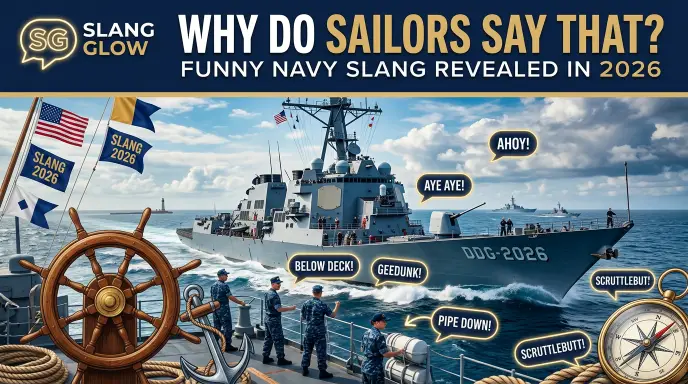
Funny Navy slang refers to humorous, informal words and expressions associated with sailors, naval life, shipboard routines, and military culture. Some terms describe everyday situations in a playful way, while others developed as inside jokes among people who spend a lot of time working and living around ships.
Navy slang can sound unusual to people outside the maritime world. The humor often comes from turning ordinary shipboard experiences into memorable expressions.
What Is Funny Navy Slang?
Navy slang is a collection of informal expressions used around naval and maritime communities. Funny Navy slang adds a humorous side to that vocabulary.
Life aboard a ship involves routines, teamwork, long periods away from home, unusual working conditions, and plenty of situations that sailors may turn into jokes. As a result, certain expressions can develop a playful meaning within the community.
Not every humorous term is official military language. Some expressions are simply casual phrases that sailors or maritime workers use among themselves.
Why Does Navy Slang Sound Funny?
A lot of naval humor comes from creative descriptions of ordinary experiences. A routine task can receive a nickname that sounds much more entertaining than its official name.
Shipboard vocabulary also contains words that may sound strange when taken out of context. Terms connected with directions, equipment, meals, sleeping areas, weather, and daily routines can have meanings that are unfamiliar to newcomers.
Another reason is tradition. Naval communities have developed their own language over many years, and informal expressions can pass from one generation of sailors to another.
The result is a vocabulary that can be practical, colorful, and occasionally hilarious.
Funny Navy Terms You May Hear
Here are several naval and maritime expressions that can sound amusing to people unfamiliar with them:
| Term | Meaning |
| Scuttlebutt | Informal talk, gossip, or rumors |
| Chow | Food or a meal |
| Squared away | Organized, prepared, or in good order |
| Swab | A mop or someone doing cleaning work |
| Galley | A ship’s kitchen |
| Head | A nautical term for a bathroom |
| Aft | Toward the rear of a ship |
| Bow | The front part of a ship |
| Port | The left side when facing forward |
| Starboard | The right side when facing forward |
Some of these words are not inherently jokes. Their unusual sound or historical use is what can make them entertaining to people hearing them for the first time.
Scuttlebutt: One of the Funniest Sounding Navy Words
Scuttlebutt is one of the best known naval terms with a humorous sounding name. In casual use, it can mean rumor, gossip, or informal information.
The word has a maritime history connected with a water container or drinking water area aboard ships. Over time, the term became associated with the conversations that happened around that location.
Today, “scuttlebutt” can be used to describe unofficial talk or rumors.
For example:
“What’s the scuttlebutt about the schedule?”
Someone unfamiliar with naval vocabulary might wonder why a strange sounding word is being used for ordinary gossip.
Why “Head” Means Bathroom on a Ship
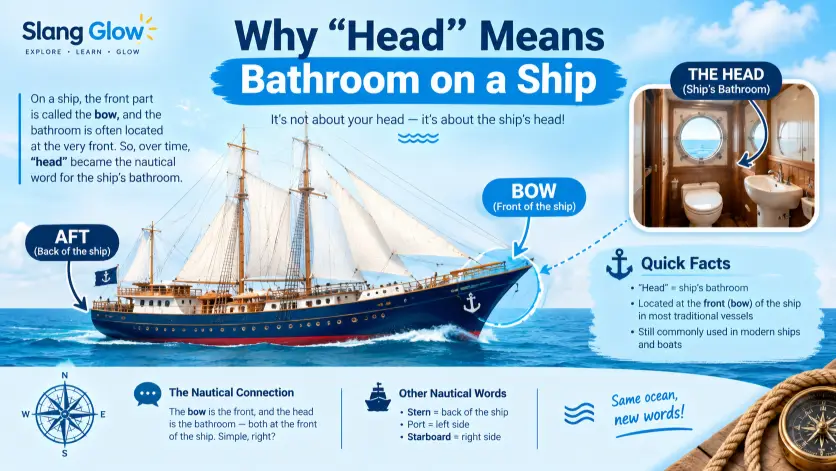
One of the most surprising nautical terms is head, which can mean bathroom or toilet aboard a vessel.
The term has historical nautical roots and became established as part of maritime vocabulary. Modern sailors may therefore use head in situations where civilians would normally say bathroom or restroom.
For example:
“I’ll meet you outside the head.”
To someone unfamiliar with nautical language, the sentence can sound confusing or unintentionally funny.
Chow and Galley Humor
Chow is an informal term for food or a meal, while a galley is the kitchen on a ship.
These words are often part of casual expressions about meals and food service.
For example:
“Chow is ready in the galley.”
The sentence simply means that food is ready in the ship’s kitchen, but the terminology gives it a distinctly naval flavor.
Food related language can become especially memorable because meals are an important part of daily life aboard a vessel.
Port and Starboard Made Simple
Port and starboard refer to the left and right sides of a vessel when facing forward.
These terms are useful because they avoid confusion that can happen when people use “left” and “right” from different positions on a moving ship.
For someone new to nautical vocabulary, though, remembering which word means which side can feel like a small language puzzle.
A simple memory trick is:
Port = left
Starboard = right
Both terms are standard nautical vocabulary rather than jokes, but their unfamiliarity can make ship related conversations sound funny to newcomers.
Aft and Bow: More Nautical Vocabulary
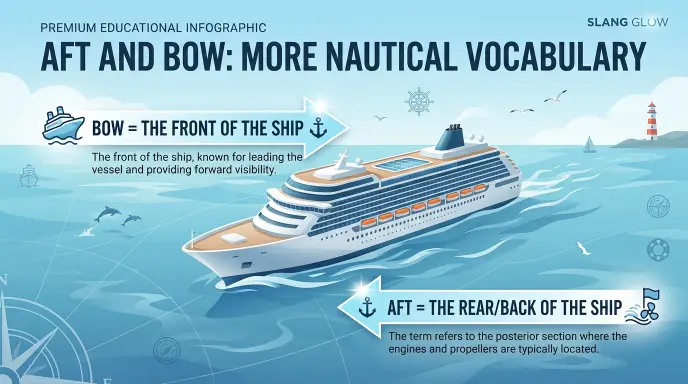
Two other common nautical direction terms are aft and bow.
Aft means toward the rear of a ship. The bow is the front section of the vessel.
You might hear someone give directions such as:
“Head aft.”
That simply means to move toward the back of the ship.
Likewise, something located near the bow is positioned toward the front.
These terms can seem amusing at first because sailors can use them naturally while someone unfamiliar with nautical language may need a quick translation.
Squared Away: When Everything Is in Order
Squared away is an informal expression meaning organized, prepared, or properly arranged.
The phrase is used in military contexts and can also appear in broader everyday English.
For example:
“Make sure your gear is squared away.”
In simple terms, the speaker is saying that everything should be properly organized and ready.
The expression is memorable because it turns the idea of being prepared into a short, distinctive phrase.
Swab and Shipboard Cleaning
A swab is a mop or cleaning tool, and to swab can refer to cleaning with one.
The term has a long maritime association, making it another word that may sound unusual to people outside naval or nautical settings.
A sentence such as:
“The deck needs a good swab.”
may sound strange to someone who normally hears “mop” instead.
This is a good example of how nautical vocabulary can make ordinary tasks sound more colorful.
Funny Navy Slang vs Official Navy Language
It is important to separate informal slang from official naval terminology.
Some words sailors use every day are standard nautical terms rather than slang. Others are informal expressions, nicknames, or community specific jokes.
Calling every unusual naval word “slang” can therefore be misleading.
For an accurate understanding, it helps to ask If a term describes an official part of a ship, a standard nautical direction, an informal nickname, or a humorous expression used in conversation.
That distinction makes a Navy slang glossary more useful for beginners.
Humorous Phrases From Naval Life
Naval life has plenty of situations that can inspire informal humor. Sailors may use playful expressions to describe long watches, difficult jobs, shipboard routines, food, weather, or the everyday challenges of living at sea.
Some phrases are widely recognized, while others may be limited to a particular crew, ship, or generation. That means a funny expression heard on one vessel may not be familiar to every sailor.
The humor usually comes from shared experiences and unusual situations, rather than from the words themselves.
Playful Names for Sailors
Sailors have been given many informal names throughout maritime history. Some are descriptive, while others developed as nicknames within naval communities.
Bluejacket is a well known informal term associated with an enlisted sailor in the U.S. Navy. The name is connected with the traditional blue uniform worn by sailors.
Another familiar expression is swabbie or swabbie, which can be used informally for a sailor. The term is associated with swabbing, an old nautical word for cleaning decks.
These names can sound funny today because they come from older maritime traditions.
Shipboard Humor and Inside Jokes
A ship is a small working community where people spend a lot of time together. Naturally, crews can develop their own jokes, nicknames, and expressions.
Inside jokes might refer to:
- A difficult assignment
- A memorable meal
- A particularly rough watch
- A confusing piece of equipment
- A funny mistake
- An unusual shipboard routine
- A memorable nickname
Not every expression becomes official slang. Some remain local jokes that are understood only by the people who experienced the situation.
Funny Military Slang Connected With the Navy
Navy personnel may also encounter informal military expressions that are used across different branches. Terms such as chow, squared away, and scuttlebutt can appear in military or maritime conversations.
Their meanings are generally more important than their humorous sound:
Chow means food or a meal.
Squared away means organized, prepared, or in good order.
Scuttlebutt can refer to rumors, gossip, or unofficial information.
These expressions show how military vocabulary can develop a distinctive conversational style.
Classic Naval Sayings and Expressions
Naval culture has produced many memorable phrases over time. Some are practical expressions, while others have become recognizable parts of maritime tradition.
A familiar example is “Fair winds and following seas.” It is traditionally used as a good luck or farewell expression, especially when someone is leaving for another journey.
The phrase has a positive meaning: it expresses the hope that the person’s journey will go smoothly.
Other nautical expressions have entered everyday English, which is why people who have never served at sea may still recognize some naval terminology.
What Makes Sailor Language Memorable?
Navy vocabulary stands out because it often combines tradition, practical communication, and humor.
A sailor needs to communicate clearly in an environment where confusion can cause problems. Words such as port, starboard, bow, and aft provide precise directions.
At the same time, informal language gives crews a way to make demanding routines feel more relaxed. Nicknames and humorous expressions can also create a sense of familiarity among people who work closely together.
That combination helps explain why naval slang remains interesting to people outside the military.
Navy Slang in Popular Culture
Movies, television shows, books, and online discussions have helped introduce naval expressions to wider audiences.
Words such as scuttlebutt, galley, head, port, starboard, and chow sometimes appear in fictional scenes involving sailors or ships.
Popular culture can simplify or exaggerate military language for entertainment, though. A phrase used by a fictional sailor does not necessarily represent how every real Navy sailor speaks.
For that reason, context matters when learning naval slang from entertainment.
Frequently Asked Questions About Funny Navy Slang
Q.1 What are some funny naval terms?
Some naval terms can sound funny or unusual to people who are unfamiliar with maritime vocabulary. Examples include scuttlebutt, head, galley, chow, swab, port, starboard, and aft. Most are legitimate nautical terms, although their unfamiliar sounds can make them amusing.
Q.2 What is the slang term for Navy?
There is no single universal slang word that replaces Navy. In casual contexts, people may use phrases such as the fleet when referring to naval forces, but the exact expression depends on the country and context.
Q.3 What does Navy mean funny?
There is no standard humorous definition of Navy itself. Online jokes may create playful meanings, but the actual word refers to a country’s maritime military force. Funny Navy slang usually comes from informal sailor expressions rather than from changing the meaning of the word Navy.
Q.4 What are some funny military slang terms?
Examples of informal military vocabulary that may sound unusual include chow for food, scuttlebutt for rumors or informal information, and squared away for being organized or prepared. Different branches can also have their own slang and nicknames.
Q.5 What is a popular Navy saying?
One well known naval expression is “Fair winds and following seas.” It is commonly used as a farewell or good wishes phrase, expressing hope for a safe and successful journey.
Q.6 What is a funny name for a sailor?
Swabbie is a playful sounding informal name associated with a sailor, while bluejacket is another established term for an enlisted sailor in the U.S. Navy. If a nickname sounds funny depends on the context and the people using it.
Q.7 What do Navy sailors yell?
There is no single phrase that all Navy sailors yell. Commands and calls depend on the situation, ship, job, and country. Sailors may use standardized commands during drills, operations, ceremonies, or other shipboard activities rather than one universal Navy shout.
Key Takeaways
Funny Navy slang combines informal sailor vocabulary, maritime traditions, military expressions, and crew humor.
The most memorable terms often include scuttlebutt, chow, swab, galley, head, port, starboard, and squared away. Some are genuine nautical terms rather than jokes, but their unusual meanings can make them entertaining for people who are new to Navy vocabulary.
A few important points to remember:
- Scuttlebutt can mean rumors or informal talk.
- Chow means food or a meal.
- Galley means a ship’s kitchen.
- Head can mean a ship’s bathroom.
- Port means the left side when facing forward.
- Starboard means the right side when facing forward.
- Aft means toward the rear.
- Bow refers to the front of a vessel.
- “Fair winds and following seas” is a traditional farewell expression.
- Not every funny sounding naval word is technically slang.
Bilkul. Part 3 mein additional useful information de rahi hoon. Part 1 aur Part 2 ki koi heading repeat nahi hogi, aur FAQs bhi dobara nahi aayengi.
How Naval Slang Became Part of Everyday English
Many nautical expressions have traveled beyond ships and naval bases into everyday English. People can use these words without having any connection to the military.
For example, “scuttlebutt” can describe gossip, while “in the same boat” can describe people facing the same problem. Expressions such as “learn the ropes” and “loose cannon” also have strong nautical associations.
Over time, these phrases became familiar outside maritime communities. Their original connection to ships may not always be obvious to modern speakers.
Funny Maritime Words That Surprise Beginners
Someone learning naval vocabulary for the first time may find certain terms unexpectedly entertaining.
The word “head” can mean a bathroom aboard a vessel. “Galley” refers to the ship’s kitchen, while “scuttlebutt” can mean unofficial talk or rumors.
A newcomer might also need to learn that “chow” simply means food and that “swab” is connected with cleaning.
These meanings demonstrate how specialized vocabulary can sound funny when heard without its maritime context.
Sailor Slang and Shipboard Culture
Informal language can help create a sense of community among people who share the same environment.
Sailors work through routines that may involve watches, maintenance, drills, meals, equipment, and long periods away from home. Shared expressions give people quick ways to describe those experiences.
Humor can make the language even more memorable. A nickname or unusual phrase may become part of a crew’s everyday communication, even when people outside that group have never heard it.
Nautical Expressions You Can Use Outside the Navy
Some maritime expressions work perfectly well in ordinary conversations.
Learn the ropes means learning how to do a job or understand how something works.
In the same boat means being in the same difficult or challenging situation as someone else.
Loose cannon describes a person who behaves unpredictably and may cause problems.
All hands on deck means that everyone needs to help with a task or situation.
These expressions show how naval and maritime language has influenced general English.
Why Sailor Nicknames Can Be So Creative
Nicknames often develop naturally in close communities. A person’s role, personality, habit, appearance, or a memorable event can inspire an informal name.
Within a shipboard environment, a nickname can become more recognizable than someone’s formal title among friends or colleagues.
Not every nickname is universal, though. A humorous name used by one crew may have no meaning to another group of sailors.
That is why lists of funny sailor names should be treated as examples rather than official Navy vocabulary.
Navy Slang Compared With General Military Slang
Navy slang has some vocabulary that is strongly connected with ships and maritime life. General military slang, on the other hand, can be shared across multiple branches.
Terms involving ships, decks, navigation, watches, galleys, and nautical directions are more likely to have a Navy or maritime connection.
Broader military expressions may appear in the Army, Navy, Air Force, Marine Corps, or other services, depending on the country.
The distinction matters because not every military slang term is specifically naval.
A Simple Guide to Understanding Navy Slang
When you encounter an unfamiliar naval expression, look at the surrounding context first.
Ask yourself:
- Is the word describing a ship or part of a vessel?
- Does it refer to food, work, equipment, or daily routines?
- Is it a nickname or informal expression?
- Could the term have a broader military meaning?
- Is the phrase being used literally or humorously?
This approach makes unusual sailor vocabulary much easier to understand.
Why Funny Navy Slang Remains Popular
Naval expressions continue to attract attention because they combine history, humor, tradition, and unusual vocabulary.
People interested in military language may enjoy learning what sailors call everyday objects and situations. Others simply find the expressions entertaining because words like scuttlebutt and swabbie sound very different from ordinary modern English.
Online discussions have also made it easier for people to discover slang from different military and maritime communities.
The best way to understand these expressions is to remember that slang can vary by country, branch, generation, ship, and social group.
Quick Reference: Funny Navy Vocabulary
| Navy or Nautical Term | Simple Meaning |
| Scuttlebutt | Rumor or informal talk |
| Swabbie | Informal term associated with a sailor |
| Chow | Food |
| Galley | Ship’s kitchen |
| Head | Ship’s bathroom |
| Swab | Mop or cleaning |
| Aft | Toward the rear |
| Bow | Front of a vessel |
| Port | Left side when facing forward |
| Starboard | Right side when facing forward |
| All hands on deck | Everyone should help |
| In the same boat | Facing the same situation |
| Learn the ropes | Learn how something works |
Final Note on Funny Navy Slang
Funny Navy slang is more than a collection of strange sounding words. It reflects the history, routines, humor, and shared experiences of maritime communities.
Some expressions are genuine naval terminology, while others are informal slang or crew specific jokes. Understanding that difference helps keep a Navy slang guide accurate while still showing why these words are so entertaining.
If you are researching funny sailor names, popular naval sayings, military slang, or unusual nautical terms, context is always important.
LEARN MORE!

Hey, I’m Emily. I’ve spent way too many hours scrolling TikTok and group chats trying to figure out what people actually mean by half the slang flying around — and somewhere along the way that turned into a whole thing I write about now. I cover internet slang, TikTok trends, and how words shift meaning practically overnight online.