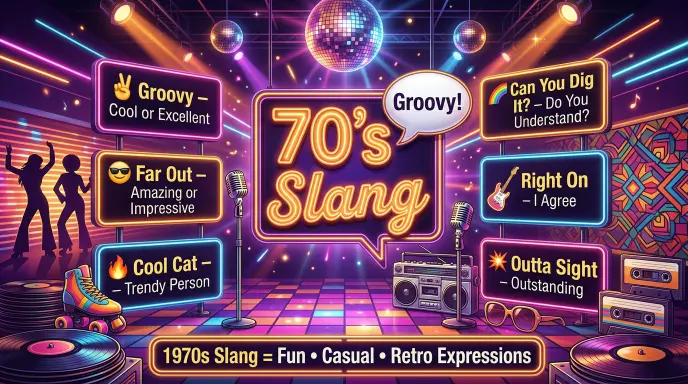
The 1970s introduced some of the most memorable slang words in American culture. From disco clubs to classic TV shows, people used colorful expressions to describe friends, fashion, music, and everyday life. Many of these slang terms are still recognized today, while others remain nostalgic reminders of the decade.
What Are 70’s Slang Words?
70’s slang words are informal expressions that became popular during the 1970s. They were commonly used by teenagers and adults in casual conversations to describe people, emotions, fashion, music, and situations.
Definition of 70’s Slang Words
70’s slang words are everyday phrases and expressions that reflect the culture, music, and lifestyle of the 1970s. Many were influenced by disco, surfing, television, and pop culture.
Were Informal expression Rude or Offensive?
Most 70’s slang words were friendly and humorous. However, some expressions could sound insulting depending on how they were used. The meaning usually depended on the context and the speaker’s tone.
When Are They Appropriate to Use?
You can use 70’s slang words in:
- Casual conversations
- Retro-themed parties
- Social media posts
- Vintage storytelling
- Movies and creative writing
Avoid using outdated slang in professional or formal communication unless it fits the context.
Popular 70’s Slang Words
Here are some of the most famous slang terms from the 1970s.
Groovy
Meaning: Something excellent, cool, or enjoyable.
Example: That new song is groovy!
Far Out
Meaning: Amazing or impressive.
Example: Your new car is far out!
Boogie
Meaning: To dance, especially to disco music.
Example: Let’s boogie all night.
Can You Dig It?
Meaning: Do you understand? or Do you agree?
Example: We’re leaving at six. Can you dig it?
Right On
Meaning: I agree or That’s great.
Example: You got the job? Right on!
Funky
Meaning: Stylish, cool, or unique.
Example: I love your funky jacket.
Foxy
Meaning: Very attractive.
Example: Everyone thought she looked foxy.
Bummer
Meaning: Something disappointing or unfortunate.
Example: Missing the concert was a real bummer.
Chill
Meaning: Relax or calm down.
Example: Just chill and enjoy the weekend.
Threads
Meaning: Clothes or fashionable outfits.
Example: Those are some cool threads.
What Are Some Common 70s Slang Expressions?
Common 70s slang expressions included words and phrases such as Groovy, Far Out, Right On, Boogie, and Bummer. These terms were used in casual conversations and often reflected the music, fashion, and entertainment culture of the decade.
What Was 70’s Jargon Used For?
70’s jargon was used to make everyday conversations more expressive and informal. People used these expressions when talking about music, fashion, friends, entertainment, feelings, and different social situations.
What Are Some Popular Sayings From the 70s?
Popular sayings from the 70s included phrases such as “Can You Dig It?” and “Right On.” Their meanings depended on the situation, but many were used to show agreement, excitement, approval, or understanding.
What Were Some Common 1970s Words?
Many 1970s words became closely connected with the culture of the decade. Terms such as Groovy, Funky, Threads, Boogie, and Far Out appeared in casual speech and popular entertainment.
What Slang Was Popular During the Seventies?
The slang from the seventies reflected several major cultural influences, including disco, television, music, fashion, and youth culture. Expressions such as Groovy, Far Out, and Right On became recognizable parts of the decade’s informal language.
What Are Some 1970s Slang Words Still Recognized Today?
Several 1970s slang words are still familiar today. Words such as Cool, Chill, Funky, and Bummer continue to appear in modern conversations, movies, television, and nostalgic content.
Where Are 70’s Slang Words Commonly Seen Today?
Although these expressions came from the 1970s, many still appear in modern entertainment and online culture.
Common Places
- Classic movies
- TV shows
- Retro fashion blogs
- Music documentaries
- Social media posts
- Vintage-themed events
Why Did People Use 70’s Slang Words?
People used 70’s slang words to express emotions, describe fashion, talk about music, and make conversations more fun. Many of these expressions reflected the culture of the 1970s, especially disco, television, rock music, and youth trends.
Common Reasons People Used 70’s Slang
- To sound fashionable.
- To fit in with friends.
- To describe music and trends.
- To express excitement.
- To make conversations more casual.
Origin of Informal expression
Many 70’s slang words came from American pop culture. Television shows, disco music, surfing communities, and African American Vernacular English (AAVE) all influenced the language people used during the decade.
Are 70’s Slang Words Still Used?
Yes. Some expressions from the 1970s are still common today. Words like “cool,” “chill,” “bummer,” and “funky” continue to appear in everyday conversations, while others are mostly used for nostalgia or retro-themed events.
Popular 70’s Slang Words vs Modern Slang
Groovy
Groovy means something is excellent, enjoyable, or stylish.
Modern alternative: Awesome.
Far Out
Far Out means something is amazing or unbelievable.
Modern alternative: Fire o amazing,70s-slang-words.
Right On
Right On means “I agree” or “That’s correct.”
Modern alternative: Facts.
Foxy
Foxy means someone is very attractive.
Modern alternative: Fine or Good-looking.
Bummer
Bummer means something is disappointing.
Modern alternative: That sucks.
Chill
Chill means relax or stay calm.
Modern alternative: Take it easy.
When Should You Avoid Using 70’s Slang Words?
Some 70’s slang words sound outdated today, and younger audiences may not understand every expression.
Avoid Using Them In
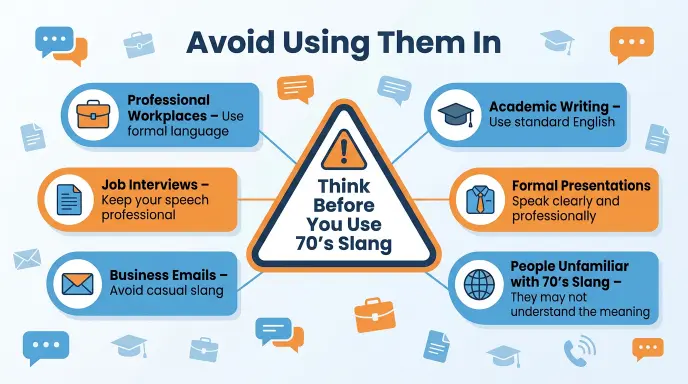
- Business meetings
- Professional emails
- Academic writing
- Official documents
- Formal presentations
Using modern language is usually a better choice in professional communication.
Frequently Asked Questions
What are some slang words from the 70s?
Some popular 70’s slang words include Groovy, Far Out, Right On, Foxy, Bummer, Funky, Boogie, Can You Dig It?, Threads, and Chill.
What is the 70s word for cool?
The most famous 70s slang word for “cool” is Groovy. Other popular alternatives included Far Out, Right On, and Funky, depending on the situation.
What was the most popular slang word in 1973?
Groovy was one of the most recognizable slang words around 1973. Other widely used expressions included Far Out, Right On, Boogie, and Can You Dig It?
What gen is 1970 slang for?
The slang of the 1970s is most closely associated with Generation X and the younger Baby Boomers, who grew up during that decade and helped popularize many of its expressions.
What is groovy 70s slang?
In 70s slang, Groovy means something is cool, excellent, fashionable, or enjoyable. It was one of the defining expressions of the decade and was commonly used to compliment music, clothing, people, and experiences.
Polite Alternatives to 70’s Slang Words
If you want to express the same ideas using modern English, these alternatives are easy to understand and work in most casual conversations.
Common Alternatives
- Awesome
- Great
- Excellent
- Amazing
- Cool
- Fantastic
- Nice
- Impressive
Impact of Using 70’s Slang Words in Communication
Using 70’s slang words adds personality and nostalgia to conversations. These expressions help capture the style and culture of the 1970s and are often used in retro content, movies, and themed events.
Benefits of Using 70’s Slang
- Makes conversations more fun.
- Adds a vintage feel.
- Reflects 1970s culture.
- Creates engaging social media content.
- Works well in retro-themed writing.
Are 70’s Slang Words Safe for Social Media?
Yes. Most 70’s slang words are safe to use on social media because they are generally harmless and widely recognized. They are often used in nostalgic posts, captions, and vintage-themed content.
Tips for Using 70’s Slang Words
- Use them in casual conversations.
- Match the slang to the context.
- Avoid outdated expressions that may confuse readers.
- Choose words your audience will understand.
Conclusion
70’s slang words remain an important part of English pop culture. Expressions like “Groovy,” “Far Out,” “Right On,” and “Funky” continue to remind people of the music, fashion, and lifestyle of the 1970s. if you’re writing about retro culture, creating social media content, or simply learning classic English expressions, these slang words are a fun way to explore one of history’s most iconic decades.

Hey, I’m Emily. I’ve spent way too many hours scrolling TikTok and group chats trying to figure out what people actually mean by half the slang flying around — and somewhere along the way that turned into a whole thing I write about now. I cover internet slang, TikTok trends, and how words shift meaning practically overnight online.