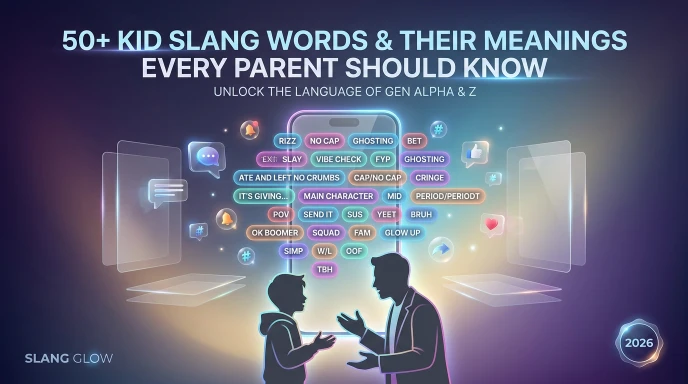
In slang, “kid” usually means a young person, a younger friend, or someone being addressed in a casual or playful way. The exact meaning depends on the context and tone of the conversation.
The word “kid” is common in everyday English, but its meaning can change when people use it casually or in online conversations. You may see someone write “hey kid,” “that kid is funny,” or “listen, kid,” and wonder what they really mean.
The basic meaning is a child or young person. However, in casual speech, “kid” can also be used for a younger friend, someone who seems inexperienced, or simply as a playful way to address another person.
The tone makes a big difference. A person can use “kid” in a friendly way, while another person may use it to sound dismissive. Understanding the situation helps you know which meaning is intended.
What Is the Slang Meaning of Kid?
In casual language, “kid” can be an informal way to refer to a younger person or address someone casually.
It does not always mean that the person is a small child. Someone might call a teenager or young adult “kid” because they are younger than the speaker.
It can also suggest that someone is new or inexperienced at something.
For example:
“He’s still a kid when it comes to business.”
This does not necessarily mean he is a child. It can mean that he does not have much experience yet.
Common uses include:
- A young person
- A younger friend
- Someone who is inexperienced
- A playful nickname
- A casual way to address someone
What Does Kid Mean in a Text Message?
In texting, “kid” is usually informal and depends on the conversation around it.
Someone might write:
“Hey kid, what’s up?”
This could be a friendly greeting.
Another person might say:
“You’re just a kid. You have plenty of time.”
Here, the speaker is focusing on the person’s age.
The word itself does not tell you if the message is positive or negative. The rest of the conversation gives you the clue.
When Someone Calls You “Kid”
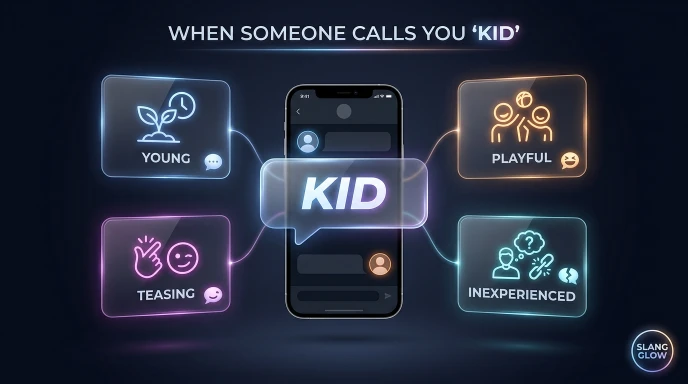
Being called “kid” can have several meanings.
If an older sibling says:
“Good job, kid!”
it may be a warm or encouraging expression.
If someone says:
“Move along, kid.”
it may sound dismissive or unfriendly.
Sometimes friends also use the word as playful teasing:
“Nice try, kid!”
if this is funny or insulting depends on the relationship between the people.
Kid as a Casual Nickname
“Kid” can work like a nickname in informal conversations.
People sometimes use it when speaking to someone younger or when they have a familiar relationship.
For example:
“What are you doing later, kid?”
The speaker may not be making a serious statement about age. It can simply be a relaxed way of addressing someone.
This use is more common in spoken conversation, but it can also appear in texts, comments, and chats.
Kid Can Mean Someone Young
The most direct use of “kid” is to describe a child or young person.
For example:
“That kid is playing with his friends.”
Here, there is no special slang meaning. It is simply an informal word for a young person.
This distinction is important because not every use of “kid” is slang.
In everyday English, “kid” is already a very common informal word.
Kid Can Suggest Inexperience
Age is not always the main idea.
Sometimes “kid” is used to describe someone who is new to an activity, job, skill, or situation.
For example:
“She’s a kid in the music industry.”
The speaker may be saying that she is new to the industry rather than saying she is literally a child.
This use often appears when there is a difference in experience between two people.
Friendly Uses of the Word
“Kid” can sound friendly when it is combined with positive or encouraging language.
Consider:
“You’ve got this, kid!”
The speaker is encouraging someone.
Another example is:
“Great work, kid!”
The word adds a casual and familiar tone.
In these cases, “kid” is not necessarily meant to put someone down.
Playful Uses in Conversation of kid meaning slang
Friends may use “kid” while joking around.
For example:
“You really believed me, kid?”
The speaker could be teasing the other person.
Another example:
“Relax, kid. I’m joking.”
Here, the word helps create a playful tone.
Still, humor depends on the relationship. A phrase that sounds funny between close friends may feel uncomfortable when said by a stranger.
Is “Kid” Positive or Negative?
It can be either.
A positive use often sounds supportive:
“Keep going, kid. You’re doing well.”
A negative use may sound condescending:
“You don’t know anything, kid.”
The difference comes from the speaker’s attitude and the situation.
When reading a text, pay attention to the words around “kid.” Positive language usually suggests friendliness, while harsh language can make the word sound insulting.
Kid in Everyday English
“Kid” is not limited to internet slang. It has been part of ordinary informal English for a long time.
You can hear it in conversations between family members, friends, teachers, coaches, coworkers, and other people.
For example:
“The kids are outside.”
This simply means children.
Another example:
“He’s a great kid.”
This may describe a young person in a positive way.
Because “kid” is so common, you should always check the context before deciding that it has a special slang meaning.
Kid and Age Differences
People may use “kid” when there is a noticeable age difference between them.
An older person might call a younger person “kid” even when that younger person is not a child.
For example:
“When I was your age, kid, things were different.”
The word highlights the difference between the speakers’ ages.
However, not everyone likes being addressed this way. In some situations, it can feel too familiar or patronizing.
Simple Examples of “Kid”
Here are a few examples that show different uses:
“That kid is really smart.”
→ A young person is being described.
“Hey, kid, come over here.”
→ A casual way to address someone younger.
“Nice job, kid!”
→ Friendly praise.
“He’s a kid at heart.”
→ Someone has a playful or youthful personality.
“I’m just kidding.”
→ The speaker is saying they were joking.
“You’ve got a lot to learn, kid.”
→ The speaker may be pointing out someone’s lack of experience.
These examples show why the surrounding words matter.
The Main Point to Remember about kid meaning slang
“Kid” is usually an informal word for a young person, but it can have a wider meaning in casual conversations.
It may describe age, experience, friendship, or a playful relationship. It can also sound disrespectful if someone uses it to make another person feel inexperienced or inferior.
The safest way to understand it is to look at the whole sentence, the speaker’s tone, and the relationship between the people involved.
How Context Changes the Meaning
The meaning of “kid” can change depending on the situation, tone, and relationship between the speakers.
For example:
- “You got this, kid!” : encouraging
- “Come on, kid, let’s go.” : casual
- “You’re only a kid.” : focuses on age
- “Listen, kid.” : may sound dismissive
So, the word itself does not always tell you what the speaker means. Context is the key.
Is “Kid” Used Differently Online?
Yes. Online conversations can make tone harder to understand because you cannot always hear the person’s voice or see their facial expression.
For example:
“Nice try, kid.”
Between friends, this might be playful teasing. In another conversation, it could sound like an insult.
When you see the word online, read the complete message before judging its meaning.
“Kid” in Gaming Conversations
In gaming chats and online communities, people may use “kid” to refer to a younger player or someone they think is inexperienced.
For example:
“That kid is really good at this game.”
Here, the speaker may simply be talking about a young player.
Another example:
“Don’t underestimate that kid.”
In this case, the word can have a positive meaning because the speaker is recognizing the person’s skill.
Common Expressions With “Kid”
Some phrases containing “kid” are common informal English expressions.
Just Kidding
“Just kidding” means “I was joking.”
Example:
“I didn’t mean it. Just kidding!”
You’ve Got to Be Kidding
This phrase shows surprise or disbelief.
Example:
“You’ve got to be kidding. We actually won?”
Kidding Around
“Kidding around” means joking or not being serious.
Example:
“We’re only kidding around.”
Kid at Heart
A “kid at heart” is an adult who still has a playful or youthful personality.
Example:
“My grandfather is a kid at heart.”
How Can You Tell What Someone Means?
If you are unsure about the meaning, check a few simple clues.
Look at the relationship. A close friend may use the word differently from a stranger.
Read the surrounding words. Friendly language can make it sound positive, while harsh language can make it sound negative.
Think about the situation. A greeting, joke, argument, or serious conversation can change the meaning.
Pay attention to tone. In texting, the surrounding messages often provide clues because you cannot hear the speaker’s voice.
Can “Kid” Be Used for Adults?
Yes. An adult can be called “kid” when they are younger than the speaker or when the word is being used playfully.
For example:
“You’ll understand when you’re older, kid.”
The person being addressed does not necessarily have to be a child.
However, calling an adult “kid” can sometimes feel patronizing, especially when the speaker is trying to make them seem less experienced.
Is “Kid” Appropriate in Every Situation?
No. “Kid” is mainly an informal expression, so it may not fit formal situations.
It can sound natural between friends, family members, or people who already have a casual relationship.
With strangers or in professional settings, using someone’s name or a neutral form of address may be better.
For example, instead of:
“Listen, kid.”
you could say:
“Excuse me, can I ask you something?”
What Are Some Alternatives to “Kid meaning slang”?
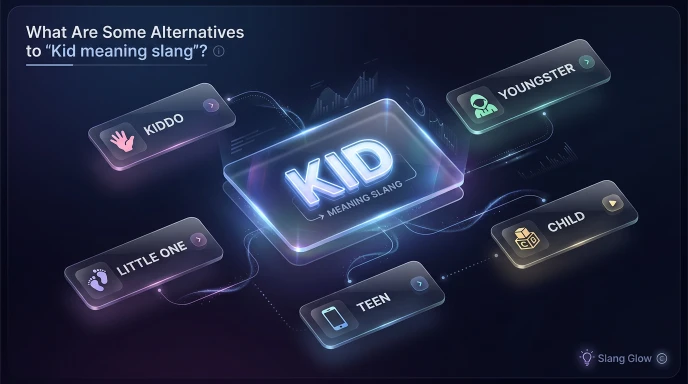
The best alternative depends on what you want to express.
If you mean a young person, you can use:
- Young person
- Child
- Teenager
- Youngster
If you are addressing a friend casually, you might use:
- Friend
- Buddy
- Pal
- Mate
These alternatives can help you choose a word that better matches the situation.
Why Is “Kid” So Common?
“Kid” is short, familiar, and easy to understand. It also sounds less formal than “child,” which makes it common in everyday conversations.
The word can communicate different feelings without changing its basic form. Depending on the context, it may sound friendly, playful, encouraging, or dismissive.
That flexibility helps explain why it appears in everyday speech, texting, entertainment, gaming, and online conversations.
What Does “Kid” Mean in Different Situations?
| Situation | Possible meaning |
| Talking about a child | Young person |
| Addressing someone younger | Casual nickname |
| Talking about someone new | Inexperienced person |
| Encouraging someone | Friendly expression |
| Teasing a friend | Playful expression |
| During an argument | Potentially dismissive |
The important thing to remember is that the same word can create different meanings in different situations.
Frequently Asked Questions about kid meaning slang
What does kid stand for in slang?
“Kid” does not stand for a specific phrase in slang. It is commonly used as an informal word for a young person or someone younger.
What does kid slang mean?
It usually means using “kid” casually to describe or address someone who is young, younger than the speaker, or sometimes inexperienced.
What is the slang word for kid?
Common informal alternatives include youngster, child, young person, and little one. The right choice depends on the context.
What does it mean if a guy calls you a kid?
He may mean that he sees you as younger, is speaking playfully, or thinks you are less experienced. His tone and the rest of the conversation help explain his intention.
What are Gen Z slang terms?
Some common Gen Z slang terms include rizz, sus, no cap, bet, lowkey, highkey, and slay. Their meanings can change as online language evolves.
Is the word “kid” disrespectful?
Not necessarily. It can be friendly or playful, but it may feel disrespectful when someone uses it to talk down to another person or dismiss their opinion.
Final Thoughts about kid meaning slang
“Kid” is a flexible word that can mean more than simply a child. It may refer to a young person, a younger friend, or someone with less experience.
In casual conversations, it can sound friendly or playful. In some situations, however, it may sound dismissive or patronizing.
The best way to understand the intended meaning is to consider the full sentence, the speaker’s tone, and the relationship between the people involved.
See More!

Hi, I’m James Parker, a writer passionate about modern slang, internet culture, and social media language. I enjoy researching trending words and explaining their meanings in simple, easy to understand English. My goal is to help readers confidently understand and use slang in everyday conversations, texting, and online platforms.