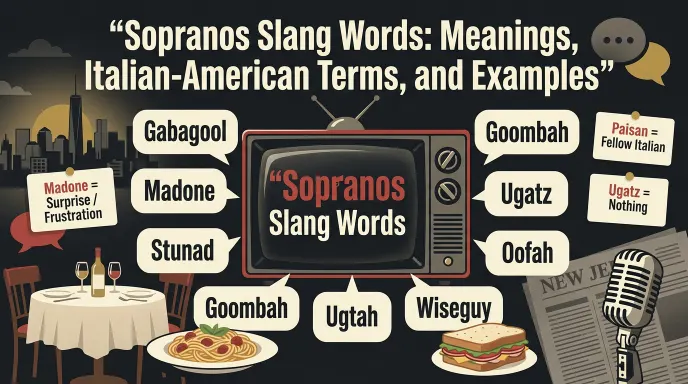
Sopranos slang words are informal Italian American expressions and mob-related terms made famous by The Sopranos TV series. They add humor, attitude, and cultural flavor to conversations.
Example: When Tony says “Ugatz,” he means “nothing” or “worthless.”
Have you ever watched The Sopranos and wondered what words like “gabagool,” “madone,” or “stunad” mean? The show is famous for its distinctive dialogue, which mixes New Jersey English, Italian American expressions, food terms, nicknames, and colorful insults.
These Sopranos slang words help give the characters their unique style. Some terms come from Italian American speech, while others are regional expressions or words that became especially popular because of the show.
In this guide, you will learn the meanings of common Sopranos slang words in simple English, along with examples that make each term easy to understand.
What Are Sopranos Slang Words?
Simple Definition
Sopranos slang words are informal words and expressions heard in The Sopranos and often connected with Italian American and New Jersey speech.
They can describe people, food, emotions, friendship, insults, money, or everyday situations.
Why Is the Slang Important?
The slang helps show the characters’ culture, location, personality, and relationships. It also gives the show’s conversations a strong regional sound.
For example, instead of saying “Oh my God,” a character may say “Madone!” to show surprise or frustration.
Italian American Influence on The Sopranos
Not Every Word Is Standard Italian
A common mistake is thinking that every unusual word in The Sopranos is standard Italian. Many expressions are actually Italian American pronunciations, regional terms, or American slang.
For example, “gabagool” is a well known Italian American pronunciation associated with capicola.
New Jersey Speech
The show is set largely in New Jersey, so its dialogue also includes local American expressions and pronunciations.
This combination makes the speech sound different from both standard American English and standard Italian.
Most Famous Sopranos Slang Words
Gabagool
Gabagool is one of the most famous words associated with The Sopranos. It refers to capicola, an Italian cured meat.
Example:
“Put some gabagool on the sandwich.”
Madone
Madone is used as an exclamation showing surprise, frustration, disbelief, or annoyance.
Example:
“Madone, what a mess!”
Stunad
Stunad is an insult for someone who is acting foolish, ignorant, or clueless.
Example:
“Don’t be such a stunad.”
Paisan
Paisan is related to the Italian word paesano and can refer to a fellow Italian, someone from the same background, or a familiar person.
Example:
“He’s an old paisan of mine.”
Goombah
Goombah can refer to a friend, associate, or connected person in Italian American slang. Its exact meaning depends on the context.
Example:
“He came by with his goombahs.”
Marone
Marone is another Italian American pronunciation associated with Madonna and can be used as an emotional exclamation.
Example:
“Marone, that’s expensive!”
Oofah
Oofah is an expression used to show frustration, exhaustion, surprise, or disbelief.
Example:
“Oofah, that was a long day.”
Sopranos Slang for Food
Gabagool
The word gabagool is probably the show’s best known food term. It refers to capicola, a cured pork product.
Example:
“I’ll have a sandwich with gabagool.”
Manigot
Manigot is an Italian American pronunciation associated with manicotti, a stuffed pasta dish.
Example:
“She made manigot for the family dinner.”
Ziti
Ziti is a type of pasta that appears often in Italian American food conversations and is strongly associated with family meals in the show.
Example:
“There’s baked ziti in the kitchen.”
Sopranos Slang for People
Wiseguy
Wiseguy can refer to a person involved with organized crime. In general American English, it can also describe someone who acts overly clever or sarcastic.
Example:
“Don’t get smart with me, wiseguy.”
Stunad
Stunad is used as an insult for someone behaving foolishly.
Example:
“You forgot your wallet again, stunad.”
Goombah
Goombah may describe a friend, associate, or acquaintance, depending on the context.
Example:
“He’s one of the old man’s goombahs.”
Sopranos Slang for Emotions
Madone
“Madone!” can show that someone is shocked, irritated, worried, or surprised.
Example:
“Madone, look at that price!”
Oofah
“Oofah” can express tiredness, frustration, or feeling overwhelmed.
Example:
“Oofah, I need a break.”
Marone
“Marone” can also work as a strong emotional reaction.
Example:
“Marone, that was close!”
How Sopranos Slang Is Used
In Casual Conversation
Most of these words are informal and work best in relaxed conversations.
Example:
“Madone, you scared me!”
In Jokes and Memes
Many Sopranos expressions are now used in memes, online jokes, and fan discussions.
Example:
Someone may use “gabagool” as a humorous reference to Italian American food.
In Fan Culture
Fans often use famous terms from the show when discussing favorite scenes, characters, or memorable quotes.
Example:
“Gabagool is basically a Sopranos classic.”
What Makes Sopranos Slang Different?
Regional Pronunciation
Some words sound unusual because of Italian American pronunciation patterns.
Cultural Background
Many terms reflect Italian American family life, food, relationships, and community traditions.
Character Personality
The slang also helps distinguish the characters and make the dialogue more memorable.
Quick Sopranos Slang Examples
Example 1
“Madone, what happened?”
Meaning: “Oh my God, what happened?”
Example 2
“He’s a stunad.”
Meaning: “He’s acting foolish.”
Example 3
“Pass the gabagool.”
Meaning: “Pass the capicola.”
Example 4
“My old paisan came by.”
Meaning: “My fellow Italian or old acquaintance came by.”
Example 5
“Oofah, I’m exhausted.”
Meaning: “I’m really tired.”
Sopranos Slang Words for Everyday Conversation
Using “Madone”
“Madone” is used to show surprise, frustration, or disbelief.
Example:
“Madone, that was expensive!”
Using “Paisan”
“Paisan” can refer to a fellow Italian or someone from a similar cultural background.
Example:
“My paisan stopped by for dinner.”
Using “Stunad”
“Stunad” is a casual insult for someone who is acting foolish or making a silly mistake.
Example:
“Don’t be a stunad and forget the keys.”
Using “Goombah”
“Goombah” can mean a friend, associate, or acquaintance in Italian American slang, depending on context.
Example:
“He came over with his goombah.”
Using “Gabagool”
“Gabagool” is the famous Italian American pronunciation associated with capicola, a cured meat.
Example:
“I’m making a sandwich with gabagool.”
Using “Oofah”
“Oofah” can express tiredness, frustration, surprise, or being overwhelmed.
Example:
“Oofah, what a busy day!”
Using “Wiseguy”
“Wiseguy” can refer to a gangster or, more generally, someone acting too clever or sarcastic.
Example:
“Don’t get smart with me, wiseguy.”
Why Context Matters
Many Sopranos slang words can have different meanings depending on the speaker, situation, and tone. Some are friendly, while others can sound insulting.
Example:
Calling someone a “paisan” may sound familiar, while “stunad” is usually insulting.
FAQs About Sopranos Slang Words
1. What slang is commonly used in The Sopranos?
Common expressions include gabagool, madone, stunad, paisan, goombah, ugatz, and marone. Many reflect Italian American or New Jersey speech.
2. What does “ugatz” mean?
Ugatz comes from Italian American slang and is used to mean “nothing” or “not a thing.” It is sometimes used dismissively.
3. What is Tony Soprano’s most famous line?
Tony Soprano has many memorable lines, but there is no single officially recognized “most famous” line. His dialogue often became popular through repeated fan references and memes.
4. What are some funny Italian slang words?
Some humorous Italian American expressions include gabagool, madone, stunad, marone, and ugatz. Their meaning depends on context and regional usage.
5. What are some gangster slang words?
Common gangster related slang includes wiseguy, made man, capo, boss, and crew. Some terms have specific organized crime meanings.
6. What does “che puzz” mean?
“Che puzz” is Italian American speech meaning “what a smell” or referring to something that smells bad. The spelling can vary because it represents pronunciation rather than standard Italian.
Sopranos Slang Words in Different Contexts
Italian American Slang
Many expressions in The Sopranos come from Italian American speech rather than standard Italian. Words like paisan, goombah, gabagool, and madone are strongly associated with this style.
Example:
“Madone, what are you doing?”
Gangster Slang
The show also uses organized crime vocabulary such as wiseguy, made man, capo, boss, and crew.
Example:
“He became a made man.”
Food Slang
Food is a major part of the show’s culture, so words such as gabagool, manigot, and ziti appear in conversations about meals and family gatherings.
Example:
“There’s some baked ziti in the kitchen.”
Insults and Teasing
Words like stunad can be used to call someone foolish or clueless. The tone can range from playful teasing to a real insult.
Example:
“Don’t be a stunad.”
Expressions of Surprise
Words like madone, marone, and oofah can express surprise, frustration, disbelief, or exhaustion.
Example:
“Oofah, that’s a lot of work!”
Slang in Fan Culture
Today, many Sopranos slang words appear in memes, social media posts, fan discussions, and comedy references. Some terms have become recognizable even to people who have never watched the full series.
Example:
“Gabagool” is often used online as a humorous reference to The Sopranos and Italian American culture.
How to Use Sopranos Slang Naturally
Understand the Meaning First
Before using a Sopranos slang word, learn what it actually means. Some terms can be friendly, funny, or insulting depending on the situation.
Example:
“Stunad” is used for someone acting foolish, so it may sound rude in some conversations.
Use the Right Context
Words like madone, oofah, and marone work best as emotional reactions, while gabagool is connected with food.
Example:
“Madone, that bill is huge!”
Know the Difference Between Italian and Italian American Slang
Not every word heard in The Sopranos is standard Italian. Some terms come from Italian American pronunciation, regional speech, or American slang.
Example:
“Gabagool” is an Italian American pronunciation associated with capicola.
Avoid Overusing the Words
Using too many slang terms in one sentence can sound forced. Pick one expression that fits naturally.
Example:
“Madone, that’s expensive!” sounds more natural than adding several slang words together.
Use Slang in Casual Settings
These expressions are generally better suited to casual conversations, jokes, memes, and fan discussions than formal writing.
Example:
“Gabagool again? 😂”
Be Aware of Tone
Some words are humorous among friends but may sound disrespectful when directed at someone.
Example:
Calling someone a “stunad” can be playful or insulting depending on the tone.
Use Pop Culture References Carefully
Some Sopranos words are now famous because of memes and internet culture. Using them as references can be fun, but not everyone will understand the reference.
Example:
“Gabagool” may be instantly recognizable to The Sopranos fans.
Common Sopranos Slang Words and Their Meanings
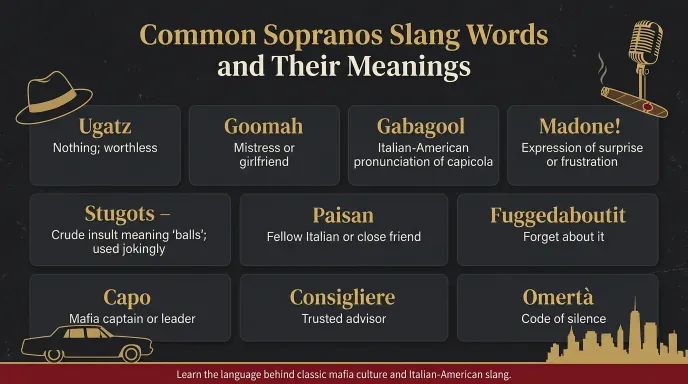
Gabagool
“Gabagool” is the famous Italian American pronunciation associated with capicola, a type of cured meat.
Example:
“Get some gabagool for the sandwiches.”
Madone
“Madone” is an expression of surprise, frustration, or disbelief.
Example:
“Madone, that’s a lot of money!”
Stunad
“Stunad” is an insult for someone who is foolish, ignorant, or acting clueless.
Example:
“Don’t be a stunad.”
Paisan
“Paisan” comes from Italian American usage and can refer to a fellow Italian or someone from the same cultural background.
Example:
“My old paisan lives nearby.”
Goombah
“Goombah” can mean a friend, associate, or acquaintance, depending on context.
Example:
“He showed up with his goombah.”
Ugatz
“Ugatz” is Italian American slang meaning nothing or not a thing.
Example:
“I got ugatz from that deal.”
Marone
“Marone” is another Italian American form of Madonna, used as an emotional exclamation.
Example:
“Marone, what a day!”
Oofah
“Oofah” can express tiredness, frustration, surprise, or being overwhelmed.
Example:
“Oofah, I’m exhausted.”
Wiseguy
“Wiseguy” can refer to a mob connected person or someone being overly clever or sarcastic.
Example:
“Don’t act like a wiseguy.”
Manigot
“Manigot” is an Italian American pronunciation associated with manicotti, a stuffed pasta dish.
Example:
“We’re having manigot for dinner.”
Conclusion
Sopranos slang words are a memorable part of the show’s dialogue and culture. Terms like gabagool, madone, stunad, paisan, goombah, ugatz, and oofah can describe food, people, emotions, or everyday situations.
Many of these expressions come from Italian American or regional speech rather than standard Italian. Understanding the context helps you use them correctly and appreciate why they became so popular in The Sopranos and online culture.
Exercise: Sopranos Slang Words
Fill in the Blanks
- “Pass me the ________.”
Answer: gabagool - “Madone!” shows ________ or frustration.
Answer: surprise - A foolish person may be called a ________.
Answer: stunad - ________ can mean nothing or not a thing.
Answer: ugatz - “Oofah!” can express tiredness or ________.
Answer: frustration
Choose the Correct Answer
- Which word is associated with capicola?
a) Paisan
b) Gabagool
c) Stunad
Answer: b) Gabagool - Which word can describe a fellow Italian or someone from the same background?
a) Paisan
b) Ugatz
c) Oofah
Answer: a) Paisan - Which word is commonly used as an insult for someone acting foolish?
a) Madone
b) Stunad
c) Gabagool
Answer: b) Stunad
Write Your Own Sentence
- Use madone in a sentence.
Example: “Madone, that was expensive!” - Use paisan in a sentence.
Example: “My old paisan came over for dinner.”
Learn More!

Hey, I’m Emily. I’ve spent way too many hours scrolling TikTok and group chats trying to figure out what people actually mean by half the slang flying around — and somewhere along the way that turned into a whole thing I write about now. I cover internet slang, TikTok trends, and how words shift meaning practically overnight online.