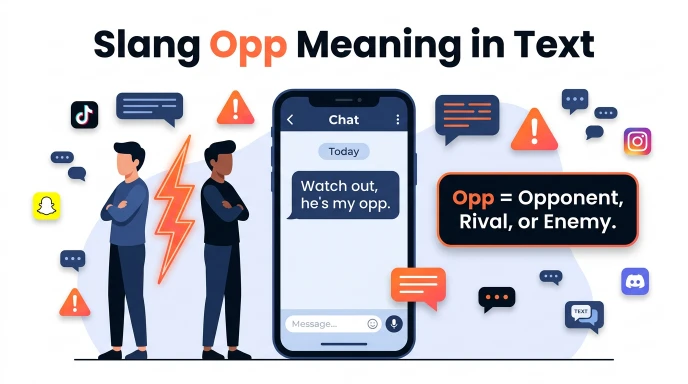
Slang opp is a popular internet term that you may see on TikTok, Instagram, Snapchat, YouTube, or in text messages. Many people search for its meaning because it appears in songs, memes, gaming chats, and social media comments. The word “opp” is short and easy to type, but its meaning depends on the conversation.
In most cases, it refers to a person who is against you or someone you see as an opponent. Learning what “opp” means can help you better understand online conversations and avoid using the word in the wrong situation. This guide explains the meaning in simple English with easy examples and useful tips.
Quick Answer
Opp is short for “opposition” or “opponent.” In slang, it usually means a rival, enemy, or someone who is against you.
2. What Does Slang Opp Mean in Text?
In text messages, “opp” usually means someone you do not get along with or someone on the opposite side.
The most common meanings are:
- A rival.
- An opponent.
- Someone you dislike.
- A person on the other side of a disagreement.
Example 1
Friend: “Stay away from your opps.”
Meaning: Stay away from your rivals.
Example 2
Person A: “He’s my opp.”
Meaning: He is my opponent or rival.
Example 3
Friend: “Don’t argue with your opp online.”
Meaning: Don’t start a fight with someone who is against you.
3. Full Form / Definition of the Slang
Opp is short for:
- Opposition
- Opponent
People often search for:
- Opp full form
- Opp meaning slang
- What does opp stand for?
The answer is simple. Opp means a rival, enemy, or someone who is against you.
4. Is It Rude, Offensive, or Neutral?
The word “opp” is usually neutral by itself.
However, it is often used in negative conversations because it describes someone you are against.
It is best to avoid calling someone an “opp” if you want to keep the conversation friendly.
5. Where Is It Commonly Used?
You may see “opp” in:
- Text messages
- TikTok
- Snapchat
- YouTube comments
- Gaming chats
- Online forums
- Music lyrics
It is especially common among younger people and on social media.
6. Real-Life Examples of Usage
Here are some simple examples of how people use “opp” in everyday conversations.
Friendly
Friend 1: “We were opps in the game, but now we’re friends.”
Friend 2: “That was a fun match.”
Meaning: They were opponents during the game.
Casual
Person A: “He’s my opp at school.”
Person B: “Just ignore him.”
Meaning: He is someone the speaker does not get along with.
Argumentative
Person A: “Don’t trust your opp.”
Person B: “I’ll be careful.”
Meaning: The speaker is talking about someone they see as a rival.
Gaming or Social Media Context
Player 1: “The opp team played really well.”
Player 2: “Yes, it was a close game.”
Meaning: “Opp” refers to the opposing team or opponents.
7. Origin and Background of the Slang
The word “opp” comes from the words “opposition” and “opponent.”
It became popular in street slang, music, and social media. Over time, many people started using it in text messages, online games, and videos to describe a rival or someone on the opposite side.
Today, it is widely recognized on platforms like TikTok, Instagram, Snapchat, and YouTube.
8. Comparison with Similar Slang
| Slang | Meaning | Tone | Common Use |
| Opp | Rival or opponent | Neutral | Social media, texting |
| Rival | Competitor | Neutral | Sports, school, work |
| Enemy | Someone against you | Strong | Everyday conversation |
| Hater | Someone who criticizes you | Casual | Social media |
| Competitor | Someone competing with you | Neutral | Business, sports |
9. When to Avoid Using It
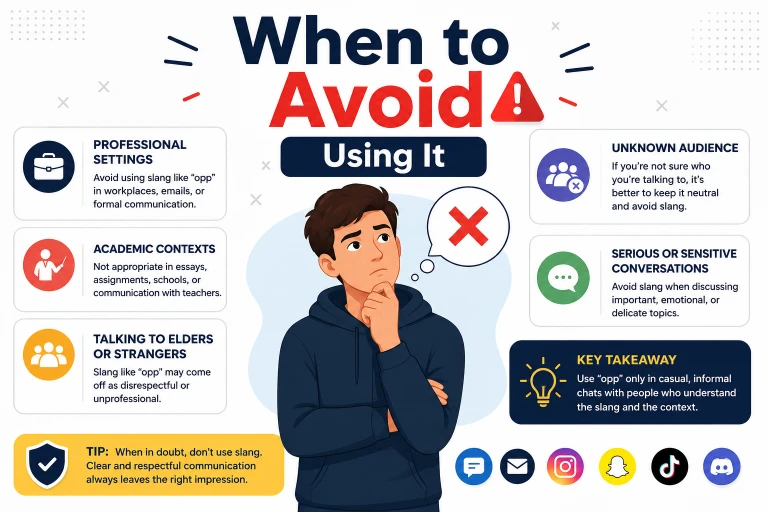
Avoid using “opp” in these situations:
- Business emails
- School assignments
- Professional meetings
- Formal conversations
- When talking to someone you do not know well
Using respectful language is usually a better choice in formal settings.
10. Polite Alternatives
Instead of saying “opp,” you can use:
- Opponent
- Rival
- Competitor
- Other team
- Different side
These words are more suitable in formal conversations.
11. Why People Use This Slang
People use “opp” because it:
- Is short and easy to type.
- Is popular on social media.
- Sounds modern.
- Quickly describes a rival.
- Is common in texting and gaming.
12. Impact of Using Slang in Communication
Using slang like “opp” can make conversations shorter and easier.
Benefits:
- Fast communication.
- Popular with younger users.
- Easy to understand in casual chats.
Disadvantages:
- Older people may not know the meaning.
- It may sound unfriendly.
- It is not suitable for professional communication.
Understanding the context helps you use the word correctly.
13. Is It Safe for Social Media?
Yes, the word “opp” is generally safe to use on social media when you are talking about a rival or an opponent.
Keep these tips in mind:
- Use it respectfully.
- Do not use it to bully or threaten anyone.
- Remember that some people may misunderstand the word.
- Think about your audience before posting.
- Use polite language if the conversation is serious.
Using respectful words helps create a positive online community.
14. Examples Section
14.1 Friendly
Emma: “We were opps in the football match.”
Noah: “Yes, but it was a great game!”
Meaning: They played on opposite teams.
14.2 Casual
Friend 1: “He’s my opp at school.”
Friend 2: “Just stay calm and avoid arguments.”
Meaning: The speaker is talking about someone they do not get along with.
14.3 Argumentative
Person A: “My opp keeps arguing with me online.”
Person B: “It’s better not to reply.”
Meaning: The speaker is referring to someone they see as a rival.
14.4 Gaming or Social Media Context
Player 1: “The opp team is really strong.”
Player 2: “Let’s work together and try our best.”
Meaning: “Opp” refers to the opposing team.
15. Comparison Table
| Word | Meaning | Tone | Best Used |
| Opp | Rival or opponent | Casual | Texting, gaming, social media |
| Opponent | Person on the other side | Neutral | Sports, school, work |
| Rival | Competitor | Neutral | Everyday conversation |
| Competitor | Someone competing | Formal | Business and sports |
| Enemy | Someone against you | Strong | Personal conflicts |
16. FAQs
16.1 What does opp mean in slang?
Opp means a rival, opponent, or someone who is against you.
16.2 What does opp stand for?
Opp is short for “opposition” or “opponent.”
16.3 Is opp a bad word?
No. The word itself is not offensive, but it is usually used in negative situations.
16.4 Where is opp commonly used?
It is commonly used on TikTok, Instagram, Snapchat, YouTube, gaming chats, and text messages.
16.5 Is opp safe to use on social media?
Yes, but you should avoid using it to insult, threaten, or bully other people.
16.6 Can opp mean a sports opponent?
Yes. In sports and games, “opp” can simply mean the player or team on the opposite side.
17. Conclusion
Slang opp meaning in text is easy to understand once you know the context. It is short for “opposition” or “opponent” and usually refers to a rival or someone on the other side. The word is common in texting, gaming, music, and social media. While it is generally safe to use, it is best to avoid using it in a way that encourages arguments or insults. Understanding the context and using respectful language will help you communicate clearly and avoid misunderstandings.

Hey, I’m Emily. I’ve spent way too many hours scrolling TikTok and group chats trying to figure out what people actually mean by half the slang flying around — and somewhere along the way that turned into a whole thing I write about now. I cover internet slang, TikTok trends, and how words shift meaning practically overnight online.