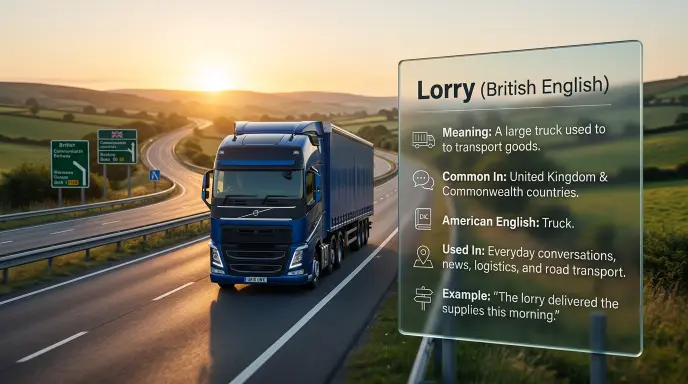
In British English, a “lorry” is simply a large truck used to transport goods and cargo.
If you’ve seen the word lorry in a British TV show, news article, or online conversation, you might wonder if it’s British slang. The simple answer is no. A lorry is the standard British English word for a large vehicle used to carry goods. In American English, the same vehicle is called a truck.
Although many people search for lorry British slang, the word is part of everyday British vocabulary rather than informal slang. It is commonly used across the UK in daily conversations, road signs, transportation, and the logistics industry.
What Does Lorry Mean in British English?
A lorry is a large motor vehicle designed to transport cargo, freight, or heavy goods from one place to another. It can range from medium-sized delivery vehicles to large articulated trucks used for long-distance transport.
Simple definition:
A lorry is the British English word for a truck.
Example:
- “The lorry arrived early with today’s delivery.”
- “A large lorry was parked outside the warehouse.”
Is Lorry Really British Slang?
No. Lorry is not slang. It is a standard British English noun used in formal and informal situations alike.
People often think it is slang because Americans rarely use the word. However, in the UK, “lorry” is the correct everyday term, just as “truck” is in the United States.
British English vs American English
The biggest difference is simply the vocabulary used in each country.
| British English | American English |
| Lorry | Truck |
| Lorry driver | Truck driver |
| Bin lorry | Garbage truck |
| Articulated lorry | Semi-truck / Tractor-trailer |
If someone in the UK says “lorry,” an American would usually say “truck.” Both words refer to the same type of vehicle.
Where Is “Lorry” Commonly Used?
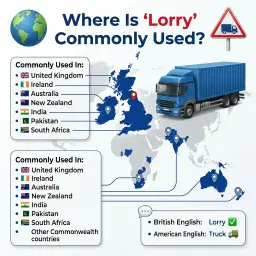
The word lorry is commonly used in:
- United Kingdom
- Ireland
- Many Commonwealth countries
- British news and media
- Road transport and logistics industries
- Everyday conversations
In the United States and Canada, truck is the preferred term instead.
Real-Life Examples of “Lorry”
Here are a few examples of how British speakers use the word:
- “The lorry delivered fresh food to the supermarket.”
- “A broken-down lorry caused heavy traffic.”
- “My uncle works as a lorry driver.”
- “The furniture arrived in a large lorry.”
Is “Lorry” Offensive or Rude?
No. Lorry is a completely neutral word. It has no rude, offensive, or slang meaning. It is safe to use in conversations, writing, schools, workplaces, and on social media.
Why Do People Search for “Lorry British Slang”?
Many people search for “lorry British slang” because they hear the word in British movies, TV shows, or online videos and assume it is informal slang. In reality, lorry is simply the standard British English word for a truck.
If you’re speaking with someone from the UK, using lorry will sound natural. If you’re speaking with someone from the United States, truck is the more common choice.
FAQs
What does lorry mean in British slang?
Lorry means a large truck used to transport goods. It is actually a standard British English word, not slang.
Why do British people say lorry instead of truck?
Lorry has long been the traditional British English term, while truck is the standard word in American English.
What is a lorry called in America?
In the United States, a lorry is called a truck.
Is lorry a formal word?
Yes. Lorry is a standard, neutral word used in both formal and informal British English.
What is a lorry driver?
A lorry driver is a person who drives a large goods vehicle to transport cargo from one place to another.
Conclusion
A lorry is a large vehicle used to transport goods and is the standard British English term for what Americans call a truck. Despite the common search term, it is not British slang. Knowing the difference between lorry and truck can help you better understand British English in everyday conversations, travel, and media.

Hey, I’m Emily. I’ve spent way too many hours scrolling TikTok and group chats trying to figure out what people actually mean by half the slang flying around — and somewhere along the way that turned into a whole thing I write about now. I cover internet slang, TikTok trends, and how words shift meaning practically overnight online.