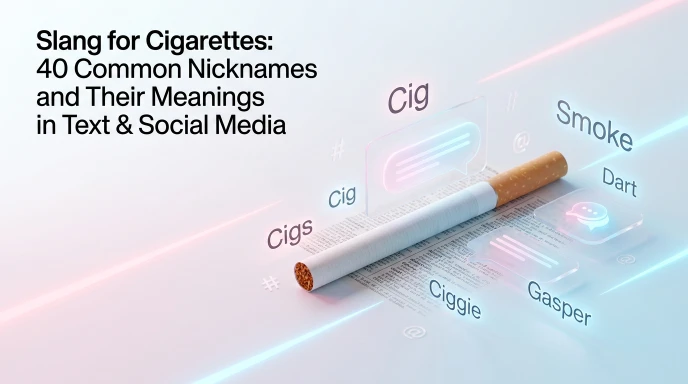
The English language has many slang words for cigarettes, and the term people use often depends on where they live. In the United States, someone might say “cig” or “smoke,” while people in Canada often use “dart.”
In the UK and Australia, words like “ciggie” are common in everyday conversation. Older slang terms such as “gasper” and “coffin nail” still appear in classic movies, books, and historical discussions.
If you’ve ever seen these words in a text message, social media post, song, or TV show and wondered what they meant, you’re in the right place. This guide explains the most popular slang terms for cigarettes using simple English and real life examples.
What Is Slang for Cigarettes?
Slang for cigarettes refers to informal words or nicknames people use instead of saying “cigarette.” These expressions are common in casual conversations, texting, movies, and online discussions.
Some slang terms are modern and widely used, while others are old fashioned or only popular in certain countries.
Simple Definition
Slang for cigarettes means informal names people use to refer to a cigarette in everyday speech.
Why Do People Use Slang for Cigarettes?
People use slang because it makes conversations quicker and more natural. Many slang terms also reflect local culture and regional language.
Common reasons include:
- It is shorter than saying “cigarette.”
- Friends use it in casual conversations.
- It appears in movies, music, and TV shows.
- Different countries have their own unique slang.
- It helps people communicate more naturally.
Where Is Cigarette Slang Commonly Used?
You may hear cigarette slang in many places, including:
- Text messages
- Social media posts
- Movies and TV shows
- Music lyrics
- Online forums
- Everyday conversations
- Books and novels
Is Cigarette Slang the Same in Every Country?
No. Different countries use different slang words.
| Country | Common Slang |
| United States | Cig, Smoke, Coffin Nail |
| United Kingdom | Ciggie, Rollie, Fag* |
| Canada | Dart, Cig |
| Australia | Dart, Ciggie |
Most Popular Slang for Cigarettes
Here are some of the best known slang words:
- Cig
- Ciggie
- Ciggy
- Smoke
- Dart
- Gasper
- Coffin Nail
- Cancer Stick
- Square
- Bogie
- Rollie
- Heater
Each of these terms has a different history, popularity, and regional use. In the next section, we’ll explain each one with meanings and examples.
Part 2: Popular Slang for Cigarettes Explained
Different countries and communities use different slang words for cigarettes. Some are modern and commonly heard, while others are old fashioned and mostly appear in movies, books, or older conversations. Here are some of the most well known terms.
1. Cig
Meaning: The most common short form of “cigarette.”
Used In: Worldwide
Example:
“Can I borrow a cig before we leave?”
2. Ciggie (Ciggy)
Meaning: A friendly and informal word for a cigarette.
Used In: United Kingdom, Australia, New Zealand
Example:
“He’s outside having a ciggie.”
3. Smoke
Meaning: A casual way to refer to a cigarette.
Used In: Worldwide
Example:
“I’m going outside for a smoke.”
4. Dart
Meaning: A popular slang word for a cigarette.
Used In: Canada and Australia
Example:
“They stopped for a quick dart during lunch.”
5. Gasper
Meaning: An old fashioned slang term for a cigarette.
Origin: It likely comes from the coughing or gasping caused by cigarette smoke.
Example:
“The old detective lit a gasper while waiting.”
6. Coffin Nail
Meaning: A humorous but negative nickname for a cigarette because of its health risks.
Example:
“He joked that every coffin nail cost him another dollar.”
7. Cancer Stick
Meaning: A sarcastic term that highlights the dangers of smoking.
Example:
“He threw away his last cancer stick and decided to quit.”
8. Square
Meaning: Older American slang for a cigarette.
Example:
“Got a square I can borrow?”
9. Bogie
Meaning: A traditional British slang word for a cigarette.
Example:
“He stepped outside to finish his bogie.”
10. Rollie
Meaning: A hand rolled cigarette made with loose tobacco.
Used In: UK, Australia
Example:
“My grandfather preferred smoking rollies instead of factory made cigarettes.”
Why Do People Use Slang for Cigarettes?
People use slang because it:
- Makes conversations shorter.
- Sounds more casual.
- Reflects local culture.
- Helps people fit into social groups.
- Appears frequently in movies, TV shows, music, and online conversations.
Quick Comparison Table
| Slang Term | Meaning | Common Region | Still Popular? |
| Cig | Cigarette | Worldwide | ✅ Yes |
| Ciggie | Cigarette | UK, Australia | ✅ Yes |
| Smoke | Cigarette | Worldwide | ✅ Yes |
| Dart | Cigarette | Canada, Australia | ✅ Yes |
| Gasper | Cigarette | Older slang | ❌ Rare |
| Coffin Nail | Cigarette | US | ⚠️ Sometimes |
| Cancer Stick | Cigarette | US | ⚠️ Sometimes |
| Square | Cigarette | US | ❌ Rare |
| Bogie | Cigarette | UK | ❌ Rare |
| Rollie | Hand rolled cigarette | UK, Australia | ✅ Yes |
What are slang words for cigarettes?
There are many slang words for cigarettes, and the most common ones vary by country. Popular examples include:
- Cig
- Cigs
- Ciggie (or Ciggy)
- Smoke
- Dart
- Gasper
- Coffin Nail
- Cancer Stick
- Rollie
- Bogie
- Heater
- Square
Some of these terms are modern and widely used, while others are older slang that you may hear in classic movies or books.
What is a nickname for a cigarette?
A nickname for a cigarette is simply an informal word people use instead of saying “cigarette.”
Some popular nicknames include:
- Cig
- Smoke
- Ciggie
- Dart
- Gasper
- Rollie
These names are commonly used in casual conversations among friends.
Example:
“I’m going outside for a smoke.”
What is another name for cigarettes?
Besides the word cigarettes, people may also say:
| Alternative Name | Notes |
| Cigs | Most common abbreviation |
| Smokes | Informal |
| Ciggies | Common in the UK and Australia |
| Darts | Popular in Canada |
| Rollies | Hand rolled cigarettes |
| Gaspers | Old fashioned slang |
| Coffin Nails | Humorous nickname |
| Cancer Sticks | Negative slang |
These words all refer to cigarettes, although some are more common in certain regions.
What is smoking in slang?
When talking about smoking, people often use casual slang expressions instead of saying “smoking a cigarette.”
Common slang includes:
- Having a smoke
- Lighting up
- Stepping out for a cig
- Grabbing a dart
- Having a ciggie
Examples:
- “Let’s go have a smoke.”
- “He’s outside lighting up.”
- “She went for a quick dart.”
These phrases usually mean someone is smoking a cigarette.
What is a cigarette girl slang?
A cigarette girl is not actually slang. It is a traditional term for a woman who sold cigarettes, cigars, and small items in restaurants, theaters, casinos, clubs, or hotels during the early and mid 1900s.
Today, the term is mostly used when talking about history, vintage fashion, old movies, or classic entertainment venues.
How do Brits say cigarette?
In the United Kingdom, people commonly use words such as:
- Cig
- Ciggie
- Rollie (for a hand rolled cigarette)
- Fag (common in the UK but offensive in many other countries)
Example:
“Can I borrow a ciggie?”
If you’re outside the UK, it’s best to avoid using “fag” because it has a very different meaning in countries like the United States.
What is a funny name for smokes?
Some humorous or joking nicknames for cigarettes include:
- Coffin Nail
- Cancer Stick
- Lung Burner
- Nic Stick
- White Stick
- Death Stick (informal joke)
- Chimney Starter (playful nickname)
These names are often used humorously to point out the health risks of smoking rather than to promote it.
Is “cigs” slang for cigarettes?
Yes. “Cigs” is one of the most common slang abbreviations for cigarettes.
It is widely used in:
- Text messages
- Social media
- Everyday conversations
- Online forums
Examples:
- “I’m out of cigs.”
- “Can you buy a pack of cigs?”
- “He forgot his cigs at home.”
The term is understood in many English speaking countries and is one of the most common informal ways to refer to cigarettes.
Real Life Examples of Cigarette Slang
Learning slang is easier when you see it used in everyday conversations. Here are some common examples.
Example 1: Casual Conversation
Jake: “I’m going outside for a smoke.”
Ryan: “I’ll come with you.”
Example 2: Text Message
Friend 1: “Can you grab a pack of cigs?”
Friend 2: “Sure, I’ll get them on the way.”
Example 3: Canadian English
Mark: “Want to have a dart before we leave?”
Sam: “Yeah, let’s go.”
Example 4: British English
Emma: “Have you got a ciggie?”
Lucy: “Sorry, I don’t smoke.”
Example 5: Older Slang
“The old detective lit a gasper while waiting outside the station.”
Regional Differences in Cigarette Slang
The same cigarette may have different slang names depending on the country.
| Country | Popular Slang |
| United States | Cig, Cigs, Smoke, Heater, Coffin Nail |
| United Kingdom | Ciggie, Rollie, Bogie, Fag* |
| Canada | Dart, Cig, Smoke |
| Australia | Dart, Ciggie, Tailor made |
| New Zealand | Ciggie, Dart |
Similar Slang Terms
If you’re learning cigarette slang, you may also come across these related expressions:
| Term | Meaning |
| Smoking | Using a cigarette or other tobacco product |
| Tobacco | The plant used to make cigarettes |
| Nicotine | The addictive substance found in tobacco |
| Pack | A box of cigarettes |
| Rollie | A hand rolled cigarette |
| Lighter | A tool used to light a cigarette |
| Ash | The burnt remains of a cigarette |
| Filter | The end of a cigarette that reduces some smoke particles |
Common Mistakes to Avoid
1. Thinking Every Slang Word Is Universal
Different countries use different slang. For example, “dart” is common in Canada but uncommon in many other places.
2. Using Old Slang in Modern Conversations
Words like gasper, square, and bogie are considered old fashioned. Most people today are more likely to say cig, cigs, or smoke.
3. Confusing Cigarettes with Cigars
A stogie usually means a cigar, not a cigarette.
4. Ignoring Regional Meanings
Some slang terms change meaning depending on the country. Always consider your audience before using regional expressions.
Why Do People Use Cigarette Slang?
People use slang because it:
- Makes conversations quicker.
- Sounds more natural.
- Reflects local culture.
- Creates a casual tone.
- Appears in movies, music, and online discussions.
- Helps people connect with others who share the same slang.
Is Cigarette Slang Safe for Social Media?
Yes, discussing cigarette slang in an educational or informational way is generally acceptable.
However, avoid:
- Promoting smoking.
- Encouraging tobacco use.
- Sharing content that glamorizes smoking.
Using these terms to explain language, culture, or history is usually appropriate.
Quick Summary Table
| Question | Answer |
| Most common slang? | Cig, Cigs, Smoke |
| UK slang? | Ciggie, Rollie |
| Canadian slang? | Dart |
| Old fashioned slang? | Gasper, Square, Bogie |
| Humorous slang? | Coffin Nail, Cancer Stick |
| Common in texting? | Cigs, Cig, Smoke |
The History of Cigarette Slang
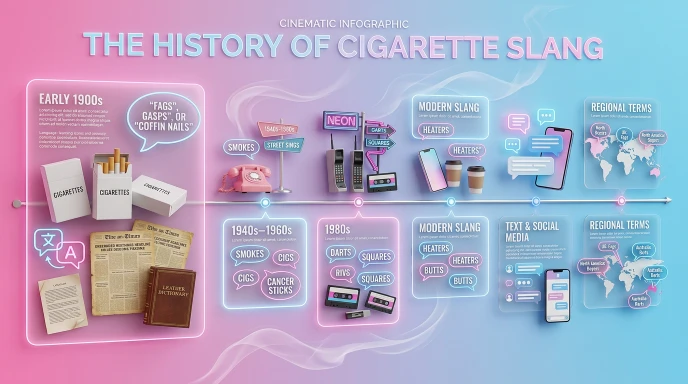
Slang for cigarettes has been around for more than a century. As smoking became more common in the late 1800s and early 1900s, people started creating shorter, more memorable names for cigarettes.
Many of these terms reflected local culture:
- Cig became popular because it is a quick abbreviation of cigarette.
- Ciggie developed as a friendly nickname in the UK and Australia.
- Dart became common in Canada and later spread to Australia.
- Gasper referred to the coughing or gasping caused by cigarette smoke.
- Coffin Nail and Cancer Stick were created as humorous but negative nicknames to highlight the health risks of smoking.
Today, some of these words are still widely used, while others mainly appear in classic films, books, or discussions of historical slang.
When Should You Avoid Using Cigarette Slang?
Although cigarette slang is common in casual speech, there are situations where it is better to avoid it.
Avoid using cigarette slang:
- In formal writing.
- During business or professional conversations.
- In school assignments unless discussing slang.
- When speaking with people unfamiliar with regional expressions.
- If a term has different or offensive meanings in another country.
Choosing the right word for the situation helps avoid confusion.
Polite Alternatives
Instead of slang, you can use standard English words.
| Slang | Polite Alternative |
| Cig | Cigarette |
| Cigs | Cigarettes |
| Smoke | Cigarette |
| Dart | Cigarette |
| Gasper | Cigarette |
| Coffin Nail | Cigarette |
| Cancer Stick | Cigarette |
| Ciggie | Cigarette |
| Rollie | Hand rolled cigarette |
Practice Exercise
Exercise 1: Choose the Correct Answer
1. Which slang word is most common in Canada?
A. Gasper
B. Dart
C. Bogie
Answer: B. Dart
2. Which word is an old fashioned slang term?
A. Cig
B. Smoke
C. Gasper
Answer: C. Gasper
3. Which slang is commonly used in the UK?
A. Ciggie
B. Dart
C. Heater
Answer: A. Ciggie
4. Which expression is often used humorously because of smoking’s health risks?
A. Cig
B. Coffin Nail
C. Rollie
Answer: B. Coffin Nail
5. What does “cigs” mean?
A. Cigars
B. Cigarettes
C. Lighters
Answer: B. Cigarettes
Key Takeaways
- Cig and cigs are the most common slang terms for cigarettes.
- Ciggie is popular in the UK and Australia.
- Dart is widely used in Canada.
- Gasper is an older slang word rarely heard today.
- Coffin Nail and Cancer Stick are humorous or critical nicknames.
- Some slang words are regional, so always consider where you’re using them.
Final Thoughts
Slang for cigarettes has changed over time, with different countries developing their own unique expressions. While modern terms like cig, cigs, smoke, and ciggie are still commonly used, older words such as gasper and square are mostly found in historical contexts.
Understanding these slang terms can help you better follow conversations in movies, books, social media, and everyday speech. Just remember that some expressions are regional, and a few may carry different meanings depending on the country, so it’s always best to use them thoughtfully.
View Details!

Hi, I’m James Parker, a writer passionate about modern slang, internet culture, and social media language. I enjoy researching trending words and explaining their meanings in simple, easy to understand English. My goal is to help readers confidently understand and use slang in everyday conversations, texting, and online platforms.