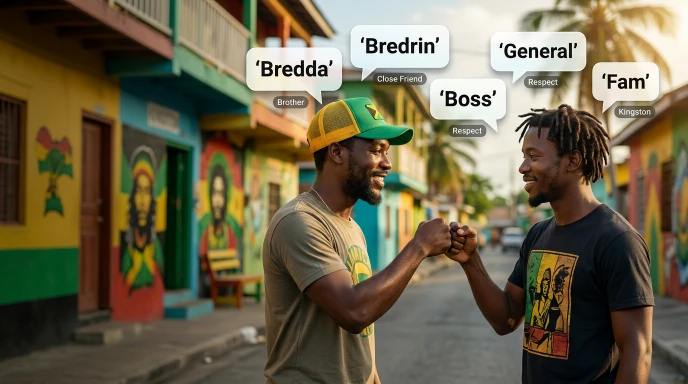
Jamaican slang for brother is “bredren” (or “bredda”), a friendly term used to mean a close friend, brother, or trusted companion.
Jamaican slang for brother includes friendly words that people use to show respect, friendship, or family like bonds.
Many people search for these terms after hearing them in reggae songs, movies, social media, or while visiting Jamaica. Some words describe a real brother, while others refer to a close friend.
Learning these expressions helps you understand Jamaican culture and everyday conversations. Many of these words sound simple, but their meaning depends on the situation and the relationship between the speakers.
Quick Answer:
The most common Jamaican slang for brother is “Bredda” (also spelled Bredda). People use it to mean brother, close friend, or buddy.
What Does Jamaican Slang for Brother Mean?
Jamaican slang for brother refers to informal words that people use for a male sibling, a close friend, or someone they respect. The most popular term is “Bredda.” People often use it in daily conversations instead of saying “brother.”
Common Jamaican Slang for Brother
| Slang Word | Meaning | Common Use |
| Bredda | Brother or close friend | Everyday conversations |
| Bredrin | Brother, friend, or member of the same group | Rastafarian and casual speech |
| Boss | A respected man | Friendly greeting |
| General | Someone admired or respected | Casual conversations |
| Fam | Family or close friend | Young people and social media |
Full Definition of “Bredda”
Bredda comes from the word brother. Jamaican speakers shorten the word in everyday speech. People use it to greet friends, family members, or someone they trust.
The word does not always mean a real brother. Many people use it for close friends because it shows friendship and respect.
Is Jamaican Slang for Brother Rude, Offensive, or Neutral?
Jamaican slang for brother is neutral. People use these words in a friendly and respectful way. The meaning depends on the relationship and the situation.
| Term | Tone | Notes |
| Bredda | Neutral | Most common friendly term |
| Bredrin | Neutral | Popular in Jamaican and Rastafarian culture |
| Boss | Friendly | Shows respect |
| General | Respectful | Used for someone admired |
| Fam | Casual | Common among young people |
Where Is Jamaican Slang for Brother Commonly Used?
People use these words in many everyday situations. You can hear them in both spoken and online conversations.
- Daily conversations in Jamaica
- Reggae and dancehall music
- Social media posts
- Text messages
- TikTok and Instagram videos
- YouTube content
- Friendly chats between friends
Real Life Examples of Jamaican Slang for Brother
These examples show how people use Jamaican slang naturally.
Friendly
A: “Mi bredda, how yuh stay?”
B: “Everything good.”
Casual
“We are meeting later, bredda.”
Argumentative
“Listen, bredda, you need to tell the truth.”
Gaming or Social Media
“Good game, bredrin. See you in the next match.”
Origin and Background of Jamaican Slang for Brother
The word “Bredda” comes from the English word “brother.” Jamaican Patois changed the pronunciation over many years. People started using it for friends as well as family members. The word became popular through Jamaican culture, reggae music, and everyday speech.
FAQs
What do Jamaicans call their brothers?
Jamaicans often say “Bredda” or “Bredrin.” People use these words for a real brother or a close friend.
What is Jamaican slang for bro?
The most common Jamaican slang for bro is “Bredda.” Many people also use “Bredrin” in casual conversations.
How do Jamaicans say “yeah man”?
Jamaicans often say “Yeah man” or “Yeh mon.” The phrase means yes, I agree, or everything is okay.
What does “Ja Ja” mean in Jamaican?
“Ja Ja” usually refers to God (Jah) in Rastafarian culture. People use it with respect in religious or cultural conversations.
What does “pon mi” mean?
“Pon mi” means “on me” in Jamaican Patois. People use it in everyday speech and song lyrics.
How do Jamaicans say “I love you”?
A common Jamaican Patois phrase is “Mi love yuh.” It simply means “I love you.”
Why People Use Jamaican Slang for Brother
People use Jamaican slang for brother because it sounds warm and friendly. These words create a strong sense of trust and connection.
- Shows friendship and respect
- Makes conversations feel natural
- Reflects Jamaican culture
- Builds a sense of community
- Common in music and social media
Impact of Using Jamaican Slang in Communication
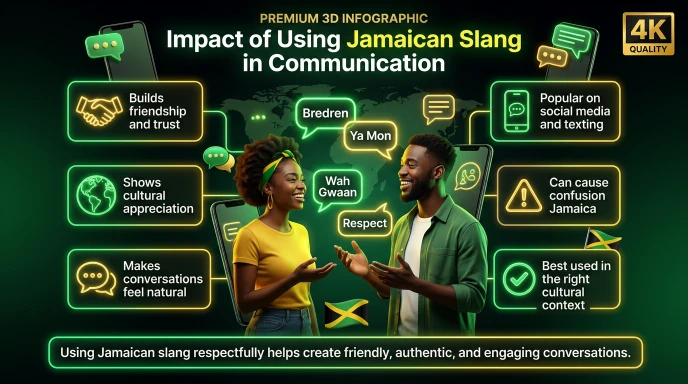
Jamaican slang makes conversations more personal. It helps people connect with friends and understand Jamaican culture. People should use these words in the right context.
Example
Formal: “Hello, my friend.”
Jamaican Slang: “Wah gwaan, bredda?”
Is Jamaican Slang for Brother Safe for Social Media?
Yes. Words like Bredda and Bredrin are safe for social media. They do not contain offensive language. People use them on TikTok, Instagram, Facebook, X, and YouTube.
Good places to use them:
- Social media captions
- Friendly comments
- Text messages
- Gaming chats
- Casual online posts
More Real Life Examples
| Situation | Example |
| Greeting a friend | “Wah gwaan, bredda?” |
| Meeting after a long time | “Good to see you again, bredrin.” |
| Thanking someone | “Respect, bredda. I appreciate your help.” |
| Playing football | “Nice goal, bredda!” |
| Gaming | “Good match, bredrin. Let’s play again.” |
| Social media comment | “Big respect, bredda. Keep shining!” |
| Encouraging a friend | “You can do it, bredda. Stay strong.” |
| Everyday chat | “Come over later, bredrin. We will hang out.” |
Conclusion
Jamaican slang for brother adds warmth and friendship to everyday conversations. “Bredda” and “Bredrin” remain the most popular words for a brother or close friend. Use these terms in casual settings and respect the culture behind them.
Practice Exercise
Choose the correct answer.
1. Which Jamaican slang word most commonly means “brother” or “close friend”?
A. Bredda
B. Bonjour
C. Hola
Answer: A. Bredda
2. Is “Bredda” rude?
A. Yes
B. No
Answer: B. No
3. Where do people often use “Bredrin”?
A. Friendly conversations
B. Business contracts
C. Legal documents
Answer: A. Friendly conversations
4. Which sentence uses the slang correctly?
A. “Thanks, bredda. You helped me a lot.”
B. “Please sign this contract, bredda, Your Honor.”
C. “The science book is bredda.”
Answer: A. “Thanks, bredda. You helped me a lot.”
Related Jamaican Slang Terms!

Hi, I’m James Parker, a writer passionate about modern slang, internet culture, and social media language. I enjoy researching trending words and explaining their meanings in simple, easy to understand English. My goal is to help readers confidently understand and use slang in everyday conversations, texting, and online platforms.